

Effective Ways to Remove Skin Debris Safely
Publicado por Editorial Team en
Table of Contents
- What Counts as Skin Debris (And Why It Matters)
- How to Remove Ingrained Dirt from Skin at Home
- How to Unclog Pores Naturally Without Irritation
- Best Debriding Soap: What to Look For
- Chemical Exfoliants and Enzyme Washes: When to Use Them
- Dry Brushing, Loofahs, and Washcloths: Doing It Right
- Safety Precautions for Sensitive Skin and Barrier Repair
- Hygiene Standards for Tools and Post-Removal Care
- Frequently Asked Questions
Last Updated: October 4, 2026
What Counts as Skin Debris (And Why It Matters)
Skin debris is the mix of dead skin cells, excess sebum, sweat residue, and environmental particles that builds up on the skin's surface and inside pores. Left alone, this buildup dulls skin texture and blocks the natural renewal process.
Most people assume a daily wash handles it. It often doesn't.
The outer layer of your skin sheds cells constantly. When oil and dirt trap those cells, they pile up instead of falling away. That's when you notice rough patches, clogged pores, and a grey, tired look.
A common mistake is scrubbing harder to fix this. That damages the skin barrier and makes things worse.
The issue is rarely effort. It's method.
Below, we break down how to remove skin debris safely, from softening the surface to repairing the barrier afterward.
American Academy of Dermatology guidance on face washing
How to Remove Ingrained Dirt from Skin at Home
Ingrained dirt sits deeper than surface grime, so it needs a staged approach. Rushing straight to scrubbing pushes debris further in and irritates the skin.
The three steps below work for most skin types. Move slowly and let each stage do its job.
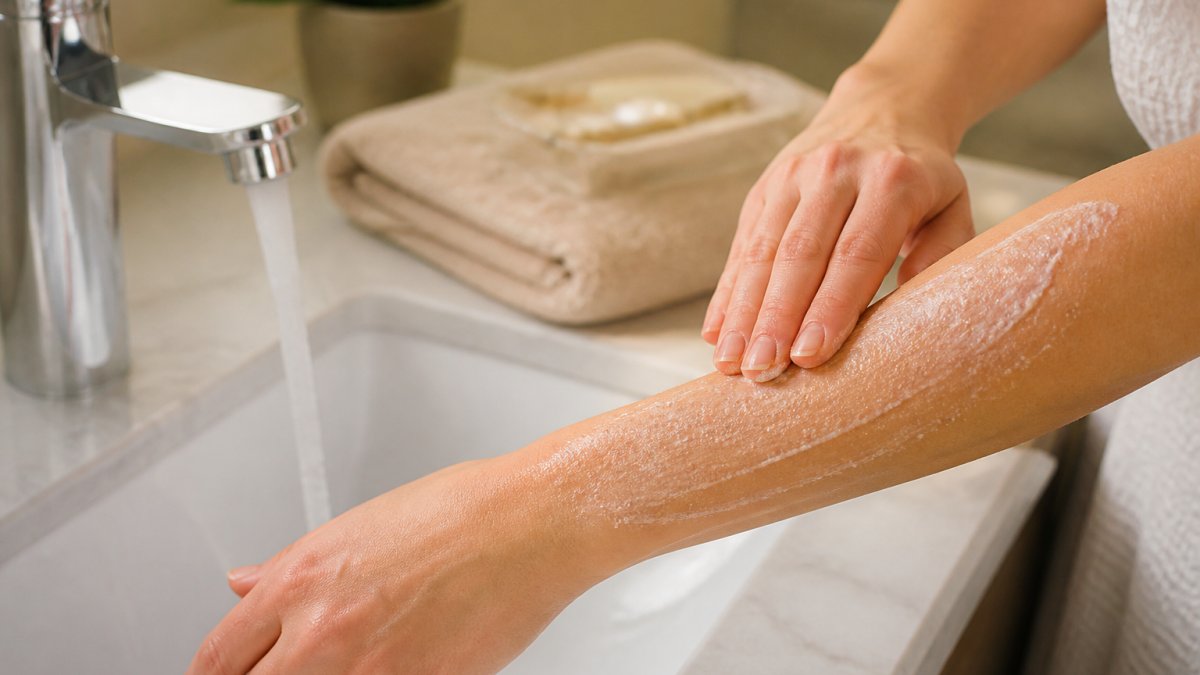
Step 1: Soften the Skin Surface First
Warm water and a few minutes of steam loosen the top layer of dead skin cells. This makes everything that follows gentler and more effective.
Wet your skin with lukewarm water, not hot. Hot water strips oils your barrier needs.
Step 2: Lift Debris with Gentle Mechanical Action
Use a soft washcloth or your fingertips in slow circles. Let the cleanser do the work, not pressure.
- Apply cleanser to damp skin
- Massage for 30 to 60 seconds
- Avoid scrubbing red or broken areas
Step 3: Rinse, Repeat, and Assess
Rinse with lukewarm water and pat dry. Check the skin in natural light.
If debris remains, wait a day before repeating. Daily aggressive cleansing backfires.
How to Unclog Pores Naturally Without Irritation
Natural methods can unclog pores when they respect the skin barrier. The key is softening debris first, then removing it without stripping oils.
Many people think "natural" means "weak." Done right, it's simply gentler.
Natural Cleansers That Actually Work
Look for plant-based cleansers with ingredients like aloe, glycerin, and gentle surfactants. These lift sebum and skin debris without harsh sulfates.
Avoid products with heavy fragrances or alcohol. They trigger irritation on sensitive skin.
Cleveland Clinic overview of clogged pores
Steam, Clay, and Other Pore-Softening Methods
Steam opens pores temporarily and softens sebum. Clay masks absorb excess oil from the surface.
- Steam for 5 to 8 minutes, no longer
- Apply clay to oily zones only
- Follow with moisturizer within minutes
Dry skin should skip clay. It pulls too much oil.
Best Debriding Soap: What to Look For
A debriding soap is formulated to loosen and lift debris, dead cells, sebum, environmental particles, rather than just wash the surface. The best ones do this without stripping the skin barrier, which is a harder balance than most cleansers achieve.

Here's what separates a real debriding formula from a standard bar:
- Particle size and type: Fine, uniform particles (often measured in angstroms or microns) can slip into pore openings and lift debris. Large grit, apricot shells, coffee grounds, salt crystals, creates microabrasions that irritate the barrier without reaching the pore.
- Surfactant system: Gentle, plant-derived surfactants (coconut, sugar, or amino-acid based) lift oil and debris while leaving the acid mantle intact. Harsh sulfates like sodium lauryl sulfate strip lipids and trigger rebound oil production.
- Active debriding ingredients: Look for bio-form carbon, diatomaceous earth, ellagic acid, or mild fruit enzymes. These bind to or dissolve debris rather than just scrubbing it.
- pH range: A slightly acidic to neutral pH (around 5.0-6.5) supports the skin barrier. Highly alkaline soaps (pH 9+) disrupt it and leave skin tight.
- Non-comedogenic and hypoallergenic: Fragrance-free, dye-free formulas reduce the risk of irritation and clogged pores, especially important if you're already treating debris buildup.
A common pattern among people who see no improvement from drugstore cleansers is that the product cleans the surface but never reaches the pore. Debriding soaps are designed to close that gap.
When comparing options, read the ingredient list before the marketing claims. A soap that lists its particle size, surfactant source, and pH is usually more transparent about what it actually does.
Chemical Exfoliants and Enzyme Washes: When to Use Them
Chemical exfoliants dissolve the bonds holding dead skin cells together. They work without scrubbing, which makes them useful for sensitive or acne-prone skin.
There are two main types:
Nature's Gift™ Debriding Cream 2oz →
- Alpha-hydroxy acids (AHAs): Work on the surface. Good for dullness and texture.
- Beta-hydroxy acids (BHAs): Oil-soluble. Better for clogged pores and comedones.
Enzyme washes use fruit enzymes to gently digest dead skin cells. They're milder than acids and suit reactive skin.
Start with once or twice a week. Overuse causes redness and barrier damage.
If you're new to acids, patch test first. Then build up slowly.
Dry Brushing, Loofahs, and Washcloths: Doing It Right
Dry brushing and loofahs remove dead skin cells from the body, but technique decides whether they help or harm. Used wrong, they cause microtears and irritation.
Here's how each tool compares:
| Tool | Best For | Frequency | Watch Out For |
|---|---|---|---|
| Dry brush | Body, circulation | 2-3x weekly | Too much pressure |
| Loofah | Body exfoliation | 1-2x weekly | Bacteria buildup |
| Washcloth | Face, gentle cleansing | Daily | Rough fabrics |
| Fingertips | Sensitive skin | Daily | None |
Replace loofahs every few weeks. They harbor bacteria in a warm, wet bathroom.
For the face, use a soft washcloth or your hands. Skip dry brushing on the face entirely.
Safety Precautions for Sensitive Skin and Barrier Repair
Most guides on removing skin debris focus entirely on the removal step and skip what happens next. That's a problem, because the skin barrier, the outermost layer of dead cells and lipids that keeps moisture in and irritants out, is at its most vulnerable right after exfoliation or deep cleansing. If you don't support it, you undo the work you just did.
How to Tell Your Barrier Is Compromised
Sensitive skin isn't a fixed trait; it's often a temporary state caused by over-cleansing, over-exfoliating, or using products that are too harsh. Signs the barrier is struggling:
- Stinging or burning when you apply moisturizer or water
- Redness that lingers more than 30 minutes after washing
- Flaking, tightness, or a rough, papery texture
- Increased breakouts or irritation from products that previously felt fine
If any of these appear, pause all exfoliation, physical and chemical, for at least 7 to 10 days. During that time, cleanse only with lukewarm water or a fragrance-free, non-foaming cleanser.
A Barrier-Repair Protocol That Works
Once you've paused exfoliation, rebuild the barrier with ingredients that mimic its natural composition:
- Ceramides: These lipids make up a significant portion of the barrier. Look for ceramide NP, AP, or EOP in moisturizers.
- Cholesterol and fatty acids: Often paired with ceramides in a 3:1:1 ratio to match skin's natural lipid mix.
- Niacinamide: Supports ceramide production and reduces redness at 2-5% concentrations.
- Panthenol (provitamin B5): Soothes and supports wound healing.
- Squalane or shea butter: Occlusive emollients that reduce water loss without clogging pores.
Apply moisturizer within 60 seconds of patting skin dry, while it's still damp, to lock in hydration. During the day, sunscreen is non-negotiable; a compromised barrier is more vulnerable to UV damage.
What to Avoid During Recovery
- AHAs, BHAs, and retinol
- Physical scrubs, dry brushes, and loofahs
- Hot water, steam rooms, and saunas
- Fragranced products, essential oils, and alcohol-based toners
If redness, stinging, or breakouts persist beyond two weeks, see a dermatologist, persistent barrier dysfunction can mimic or worsen conditions like rosacea and eczema.
National Eczema Association skin care tips
Post-removal care isn't optional. It's the step that determines whether debris removal leaves your skin clearer or more irritated.
Hygiene Standards for Tools and Post-Removal Care
Clean tools prevent the debris you just removed from going back in. This is the step most guides skip.
Follow these basics:
- Wash washcloths after every use
- Sanitize brushes weekly with mild soap
- Store tools dry, not in a damp shower
- Replace loofahs every 2 to 4 weeks
After cleansing, apply moisturizer while skin is still damp. This locks in hydration and supports barrier repair.
For deeper support, our Nature's Gift Super MSM Gel combines pure MSM with diatomaceous earth and Debriding Soap Concentrate. Layer it on clean skin and let each layer absorb.

Pair it with our Bioform Carbon Exfoliant Cleanse, which uses Bioform Carbon, ellagic acid, and coral calcium to lift stubborn surface debris. Together they support a cleaner environment for natural skin renewal.
Debris removal isn't about scrubbing harder. It's about matching the method to your skin and repairing the barrier after. That balance is where most routines fail.
At Get Your Life Back LLC, we built our Nature's Gift line around deep-cleaning formulas that work with your skin, not against it. From the Bioform Carbon Exfoliant Cleanse and Super MSM Gel, each product supports gentle debris removal and barrier repair.
Get started with Get Your Life Back LLC and give your skin the clean, calm foundation it needs.
Frequently Asked Questions
What draws dirt out of skin?
Ingredients that bind to debris and lift it away do the drawing. Liquid bio-form carbon, clays, and oil-based cleansers attract and suspend dirt, sebum, and dead skin cells so water can rinse them off. For ingrained dirt, a debriding soap with a fine particle size penetrates deeper than standard cleansers. The key is contact time: let the product sit for 30-60 seconds before rinsing.
What is the difference between exfoliation and debridement?
Exfoliation removes dead skin cells from the surface using scrubs, acids, or enzymes. Debridement goes further: it loosens and removes debris that has become embedded in pores or compromised skin, including comedones, ingrained dirt, and buildup that interferes with normal skin renewal. A debriding soap or cream works on both the surface and within the pore, while exfoliation mainly targets the outer layer.
How do I remove deep dirt from skin naturally without damaging my skin barrier?
Start by softening the skin with warm water or a brief steam. Apply a gentle debriding product and massage in circular motions for no more than one minute. Rinse with lukewarm water and follow immediately with a moisturizer to support the skin barrier. Avoid harsh scrubbing or hot water, which strip lipids and leave skin more vulnerable. Repeat no more than two or three times per week.
Can I use the same tools for removing skin debris if I have sensitive skin?
Yes, but choose tools carefully. A soft washcloth or silicone scrubber is gentler than a loofah or stiff brush. Clean your tool after every use with hot water and soap, and let it dry completely to prevent bacterial growth. If you have eczema or psoriasis, patch-test any new tool on a small area first. Stop if you notice redness, stinging, or increased irritation.
Compartir esta publicación
- Etiquetas: best debriding soap, effective ways to remove skin debris, how to remove ingrained dirt from skin, how to unclog pores naturally, remove skin debris