

Natural Relief for Scabies and Mites: A Safe Guide
Publicado por Editorial Team en
Last Updated: November 22, 2026
Quick Summary
Natural relief for scabies and mites means using soothing measures like aloe vera, oatmeal baths, and diluted tea tree oil to calm irritated skin while clinician-recommended treatment clears the infestation. These remedies support recovery but do not reliably kill mites or eggs, so they should never delay a diagnosis or proper treatment.
- Dilute tea tree oil to roughly 5% in a carrier oil and patch test for 24 hours first.
- Aloe vera, coconut oil, and oatmeal baths soothe skin but are not acaricidal and do not kill mites.
- Nothing applied at home reliably kills scabies eggs, which is why reinfestation happens.
- Wash bedding, clothing, and towels in hot water and dry on a hot setting.
- Crusted scabies requires prompt medical treatment, and natural measures have no role in managing it.
Table of Contents
- Why Natural Relief for Scabies and Mites Needs a Careful Approach
- Natural Treatment for Scabies in Humans: What the Evidence Says
- Tea Tree Oil for Scabies: Dilution, Safety, and Limits
- What Kills Scabies Eggs and Why It Matters for Reinfestation
- How Long Does Scabies Itching Last After Treatment?
- Household and Close-Contact Coordination: Cleaning That Counts
- Crusted Scabies and Higher-Risk Situations
- Building a Skin Care Routine That Supports Recovery
- Frequently Asked Questions
Why Natural Relief for Scabies and Mites Needs a Careful Approach
Scabies is a skin infestation caused by the microscopic mite Sarcoptes scabiei, which burrows into the upper layer of skin and triggers intense itching (the WHO).
Here's the tension most guides skip. Scabies is contagious through prolonged skin-to-skin contact, and an untreated infestation can spread through a household quickly. A soothing oil or a tea tree wash may calm the itch, but if mites and eggs remain in the skin, symptoms return.
Below, we grade remedies by evidence, walk through safe dilution and application, and lay out a care plan that doesn't delay effective treatment.
Natural Treatment for Scabies in Humans: What the Evidence Says
A natural treatment for scabies in humans falls into two rough categories: remedies with some laboratory or clinical support, and remedies carried mostly by tradition. Neither category replaces a diagnosis from a medical professional, and that is the first thing we tell anyone who asks us about home remedies. The useful question is not "does this remedy have a following?" but "what kind of evidence supports it, and what can it realistically do?"
Remedies With Some Supporting Evidence
Tea tree oil is the most studied of the natural options. Some laboratory research has examined tea tree oil for activity against scabies mites in vitro. That means activity in a lab dish, not proof of a cure in human skin, and "kills mites in a petri dish" and "clears an infestation" are different claims.
Neem oil has a similar profile: traditional use plus some laboratory interest, with limited human trial data. It is often blended into soothing balms, and it is generally well tolerated when diluted, but the human evidence for clearing infestation is thin.
Remedies That Are Mostly Folk Tradition
Aloe vera, coconut oil, oatmeal baths, and baking soda baths are soothing, and we recommend them for comfort. They are not acaricidal, meaning they do not reliably kill mites. Their value is in calming irritated skin and supporting the skin barrier while effective treatment does its work.
| Remedy | Evidence Level | Kills Mites? | Best Use | Safety Notes |
|---|---|---|---|---|
| Tea tree oil | Lab evidence, limited human data | Possibly, in vitro | Supportive skin care | Dilute to about 5%; patch test; avoid face and broken skin |
| Neem oil | Traditional plus lab interest | Unclear | Soothing, some lab activity | Dilute; patch test; avoid eyes |
| Sulfur | Clinical track record | Yes, clinician-guided | Prescribed settings | Can dry skin; use as directed |
| Aloe vera | Comfort only | No | Calming irritated skin | Generally low risk; patch test |
| Oatmeal bath | Comfort only | No | Relieving itch | Keep water lukewarm, not hot |
| Clove oil | Traditional, irritating | Unclear | Avoid undiluted | High irritation risk; heavy dilution only |
Our honest read: if you want natural relief, use the comfort remedies freely and treat the mite-killing claims with caution. A remedy that soothes the skin can be part of a recovery routine, but it should not delay a diagnosis or a clinician-recommended treatment plan. When in doubt, ask a medical professional which measures are safe alongside the treatment they recommend.
Tea Tree Oil for Scabies: Dilution, Safety, and Limits
Tea tree oil is a remedy people often ask about, and the safety rules matter as much as the potential benefit. Undiluted tea tree oil can burn skin, cause contact dermatitis, and trigger allergic reactions, especially on skin already inflamed by scratching.
Here's how we'd approach it safely:
- Dilute to roughly 5% in a carrier oil such as coconut or jojoba. That's about one part tea tree to nineteen parts carrier.
- Patch test on a small area of inner forearm and wait 24 hours.
- Apply to affected skin sparingly, avoid the face and broken skin, and rinse if burning occurs.
- Stop immediately at any sign of a spreading rash or swelling.
Watch out: applying essential oil neat to raw, scratched skin is the most common mistake we see, and it turns a manageable itch into a chemical burn. Tea tree is a support measure, not a replacement for treatment your clinician recommends.
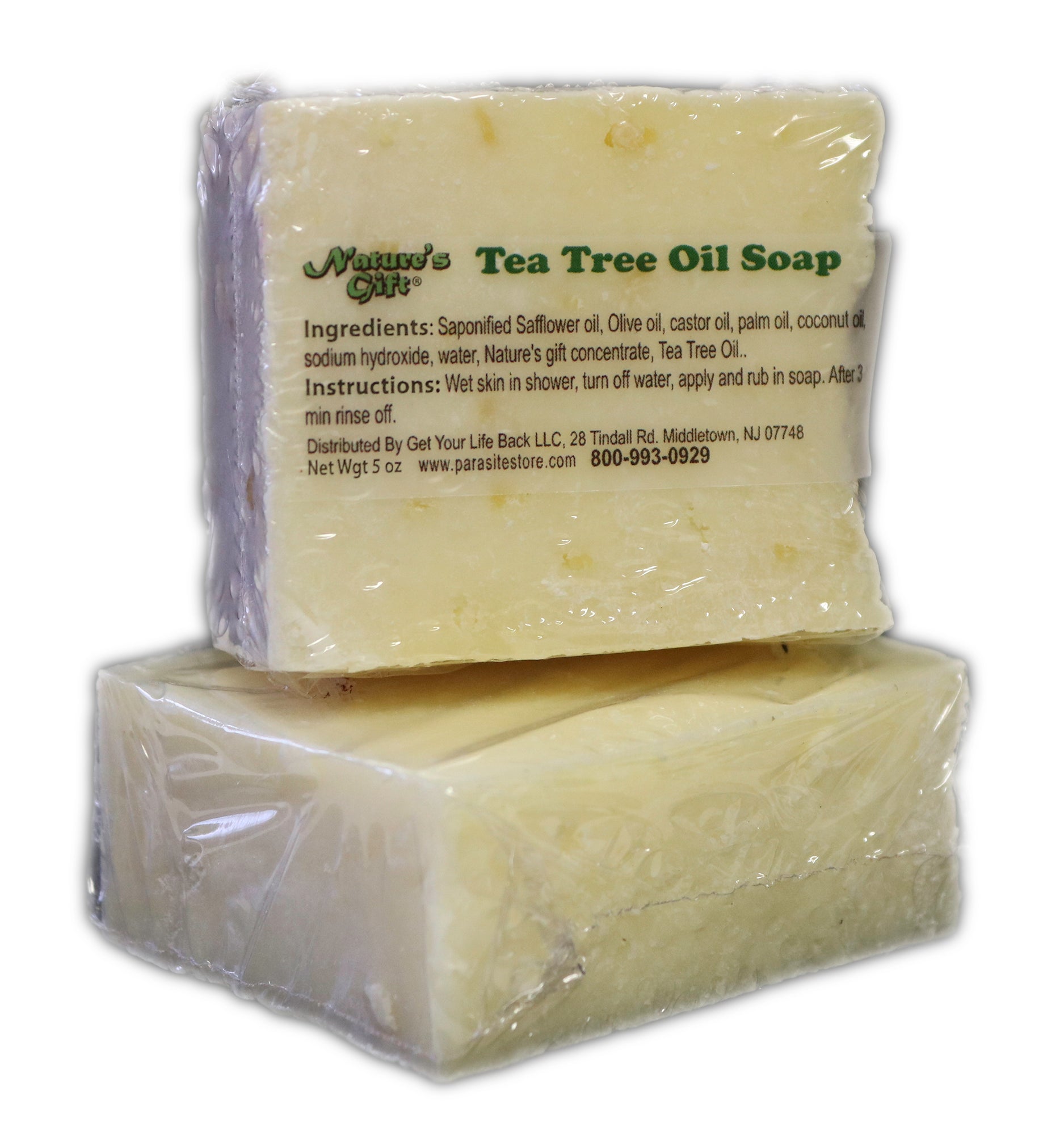
If you'd rather not mix your own dilution, a ready-made option removes the guesswork: Nature's Gift Tea Tree Oil Soap is formulated for everyday washing rather than neat application.
What Kills Scabies Eggs and Why It Matters for Reinfestation
Nothing you apply at home reliably kills scabies eggs, and that single fact explains most reinfestation. Eggs sit in burrows beneath the skin surface, where topical home remedies reach poorly.
This is why natural routines that only soothe the surface can feel like they're working for a few days and then fail. If you want to see exactly where mites and eggs hide, our guide on the burrow in scabies shows what to look for so you can target treatment and spot reinfestation early.
Our advice: pair any natural skin care with a proper diagnosis and a clinician-guided plan. Natural relief supports the skin; it doesn't reach the eggs.
How Long Does Scabies Itching Last After Treatment?
Scabies itching can persist for some time after effective treatment, even when the mites are gone.
The distinction matters because the right response is different in each case. If new burrows or a spreading rash appear after treatment, that suggests reinfestation or treatment failure and warrants a medical review.
A simple decision framework helps during that window:
- Itch fading, no new lesions: continue gentle skin care, moisturize, and give it time.
- Itch unchanged or worse, with new burrows or bumps: contact your clinician for reassessment.
- New spread to other household members: review whether close contacts were treated in the same window.
- Widespread crusted or scaly patches: seek prompt medical care rather than waiting.
A common mistake is re-treating repeatedly out of frustration during this period. For practical ways to manage that window, see our guide to soothing itchy skin from parasites, which covers comfort measures that will not interfere with treatment.
Watch out: assuming every itch after treatment means the mites are still there can lead to unnecessary repeat treatments, while assuming no itch means no problem can miss a genuine reinfestation.
Household and Close-Contact Coordination: Cleaning That Counts
Treating the person without treating the household is how infestations bounce back. Scabies spreads through prolonged skin-to-skin contact, so close contacts and household members usually need treatment at the same time, following the guidance of a medical professional.

On the cleaning side, the priorities are simple:
- Wash bedding, clothing, and towels in hot water and dry on a hot setting.
- Bag items that can't be washed and set them aside for several days.
- Vacuum soft furnishings and focus on crevices and seams.
- Coordinate timing so everyone is treated and cleaned in the same window.
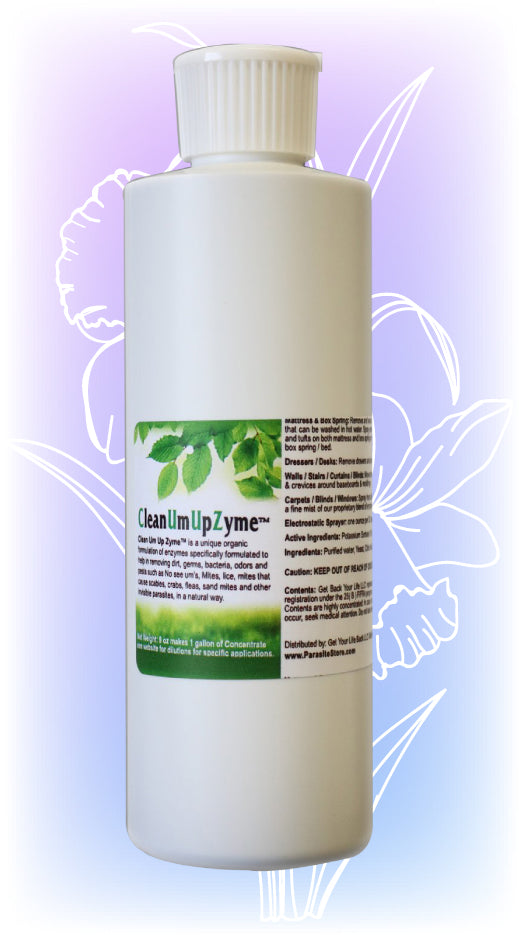
For hard-to-reach surfaces like cracks, tile grouting, and corners where debris lingers, an enzyme-based cleaner helps: Clean-Um-Up-Zyme Ultra Concentrate Enzymes is formulated for crevices and other hard-to-reach areas.
Crusted Scabies and Higher-Risk Situations
Crusted scabies is a severe form of infestation with thick, scaly skin and very large numbers of mites, and it requires prompt medical treatment rather than home care.
If you or someone in your household has widespread crusted, scaly patches, or a condition that affects immune function, skip the home remedy experiments and seek medical care. Natural measures have no role in managing this form. For readers navigating stubborn or persistent cases, our guide to natural solutions for persistent skin parasites offers deeper context on when to escalate care.
Knowing which situation you're in changes everything about the plan.
Building a Skin Care Routine That Supports Recovery
A recovery routine should calm inflammation, protect the skin barrier, and avoid adding new irritation while treatment does its work. Here's a simple structure we recommend:
- Wash gently with lukewarm water and a mild, non-stripping soap. Avoid hot water, which worsens itch.
- Moisturize while skin is still damp to lock in hydration.
- Avoid scratching where possible; keep nails short and consider cool compresses.
- Patch test any new oil or product before wider use.
- Keep it consistent rather than layering many remedies at once.
A deep-cleansing, hydrating step fits naturally here. Our Nature's Gift Sulfur Soap is a 4.5 oz bar formulated with sulfur and plant oils, used by wetting the skin, applying and rubbing in the soap with the water off, then rinsing after three minutes.
Less is more during recovery. A short, consistent routine beats a cabinet full of experiments.
The hardest part of natural relief for scabies and mites is patience: soothing the skin while giving real treatment time to work. At Get Your Life Back LLC, we build plant-based skin care around deep cleaning and hydration, using our proprietary liquid bio-form carbon technology.
Frequently Asked Questions
Can natural remedies get rid of scabies on their own?
Natural remedies can ease itching and may slow mites in laboratory studies, but no plant-based option is established as a cure for scabies in humans. Scabies mites burrow into the skin and lay eggs, so a remedy that only soothes the surface leaves the infestation running. Use natural relief for scabies and mites as support alongside a doctor-confirmed treatment plan, not as a replacement, and see a clinician if the rash spreads or does not improve.
Can tea tree oil or neem oil treat scabies?
Tea tree oil for scabies has shown mite-killing activity in laboratory testing, and neem oil appears in traditional practice, but neither has strong clinical proof of curing human infestation. Tea tree oil must be diluted before it touches skin, since undiluted essential oil can burn or trigger contact dermatitis. Neem oil is generally used as a skin oil or in cleaning routines. Treat both as comfort measures and confirm with a doctor whether prescription treatment is needed.
What kills scabies eggs?
Prescription topical treatments are the options studied for killing both mites and their eggs. Questions about what kills scabies eggs come up because eggs hatch on a delay, which is why some treatments are repeated after a set interval. Heat is the practical answer for household items: washing bedding, towels, and clothing in hot water and drying on a hot cycle removes mites and eggs from fabric. Items that cannot be washed can be sealed in a bag for several days.
How long does scabies itching last after treatment?
Itching can continue for some time after successful treatment because the skin is still reacting to mite debris. This lingering itch is not automatically a sign of treatment failure. Watch for new burrows or a spreading rash instead. If itching worsens after the first week or new bumps appear, contact your doctor, since a second treatment round is sometimes needed. Gentle moisturizing and cool compresses help while the skin settles.
How should you clean furniture and bedding after scabies?
Focus on items that touched skin for long periods. Wash bedding, pillowcases, towels, and recently worn clothing in hot water, then dry on a hot setting. Vacuum upholstered furniture and carpets, and discard the vacuum bag. Seal items you cannot wash in a plastic bag for several days. Everyone in the household and any recent close contacts should be treated at the same time, because scabies spreads through skin-to-skin contact and reinfestation is common when only one person is treated.
When should you see a doctor for suspected scabies?
See a doctor as soon as you suspect scabies, especially if itching is intense at night or you notice burrows, a pimple-like rash, or symptoms in several household members. A clinician can confirm the diagnosis and prescribe treatment that actually clears the infestation. Seek care promptly if you have crusted scabies, a weakened immune system, or widespread scaling, since these situations need stronger, supervised treatment and are more contagious.

Compartir esta publicación
- Etiquetas: how long does scabies itching last after treatment, natural relief, natural relief for scabies and mites, natural treatment for scabies in humans, tea tree oil for scabies, what kills scabies eggs