

Natural Solutions for Persistent Skin Parasites
Publicado por Editorial Team en
Table of Contents
- Understanding Parasitic Skin Infections and Symptoms
- How Scabies Burrow in Skin and What That Means for Treatment
- How to Clean Skin Pores of Debris: A Step-by-Step Protocol
- Natural Remedies: Herbal Treatments and Essential Oils
- Benefits of Bio-Form Carbon for Skin Health and Parasite Management
- Natural vs. Medical Treatments: When to Seek Professional Help
- Preventing Re-infestation: Hygiene Practices and Lifestyle Changes
- Frequently Asked Questions
Last Updated: October 2, 2026
Understanding Parasitic Skin Infections and Symptoms
Parasitic skin infections occur when microscopic organisms penetrate the skin's outer layers, triggering inflammation, itching, and visible lesions; fortunately, natural solutions for persistent skin parasites exist to address these symptoms. Understanding how parasites interact with your skin is essential for effective treatment.
How parasites infest the skin
Parasites establish infection through direct contact, contaminated environments, or compromised skin barriers. Scabies mites burrow into the stratum corneum within minutes, creating tunnels where they lay eggs and triggering intense itching and immune responses. The parasitic load determines symptom severity and treatment duration.
Parasites survive on bedding, clothing, and furniture for days, making household decontamination critical to preventing re-infestation. Addressing parasitic infestations requires both direct treatment and environmental protocols.
Recognizing common symptoms
Common indicators include intense itching that worsens at night, visible burrows or trails, red papules, and secondary skin damage from scratching. Symptoms typically emerge 2-6 weeks after infestation; some individuals experience delayed hypersensitivity reactions where itching persists after parasites are eliminated.
Distinguishing parasitic infections from eczema, psoriasis, or allergic reactions requires careful observation of linear burrows and lesion clustering in skin folds. Morgellons and Lyme disease-related symptoms can mimic parasitic infestations, underscoring the importance of professional evaluation when symptoms persist.
How Scabies Burrow in Skin and What That Means for Treatment
Scabies mites burrow into skin at 0.5-5 millimeters per day, creating visible tunnels where females deposit 1-3 eggs daily. This explains why surface-level treatments fail; topical applications must penetrate deep into the epidermis to reach mites in their burrows.
Mite feces, shed skin, and antigens trigger inflammatory cascades that persist after parasites die, causing itching to continue for weeks. Natural remedies targeting both antimicrobial action and immune modulation address the infestation and inflammatory aftermath.
Most topical applications require 7-14 days of consistent use to eliminate all parasitic generations. Incomplete treatment allows surviving mites to re-establish burrows, making comprehensive protocols combining cleansing, herbal treatments, and environmental decontamination essential.
How to Clean Skin Pores of Debris: A Step-by-Step Protocol
Removing parasitic debris and dead skin cells prevents secondary infections and accelerates healing. A systematic cleansing protocol combines mechanical removal with antimicrobial support.
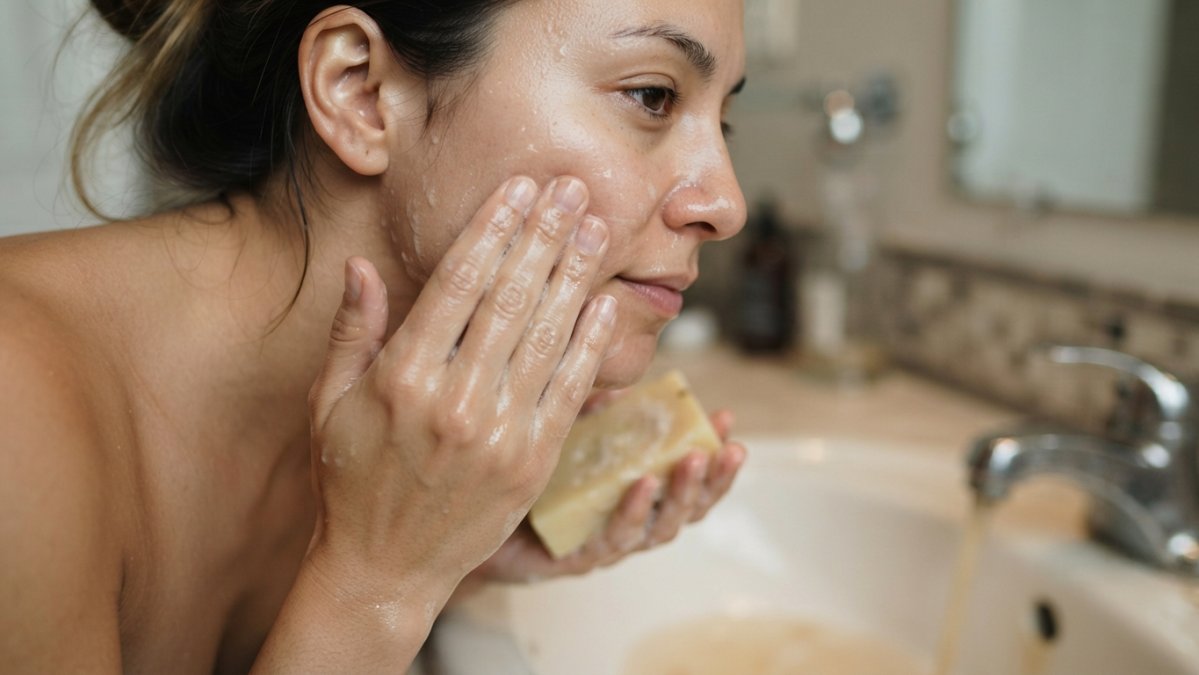
Daily cleansing routine
Begin each morning and evening with lukewarm water. Apply a gentle, plant-based debriding cleanser that removes debris without disrupting the skin barrier. Products featuring proprietary liquid bio-form carbon extract debris from pores while maintaining hydration.
Use gentle circular motions for 60-90 seconds, paying attention to skin folds and areas of intense itching where parasites burrow. Rinse thoroughly and pat dry; avoid vigorous rubbing, which damages the barrier.
Follow with a non-comedogenic moisturizer containing antimicrobial herbal extracts to support barrier recovery. Repeat twice daily throughout infestation and 2-3 weeks after.
Environmental decontamination
Wash all bedding, clothing, and towels in hot water (at least 130°F) weekly. Seal unwashable items in plastic bags for 7-10 days to suffocate parasites.
Vacuum carpeted areas and furniture thoroughly. Spray with diluted vinegar (1:1 with water) or food-grade diatomaceous earth to reduce parasitic load.
Wipe frequently touched surfaces (doorknobs, light switches, remotes, fixtures) daily with a damp cloth to prevent re-infestation.
Natural Remedies: Herbal Treatments and Essential Oils
Plant-based antimicrobial compounds support parasitic infestations through multiple mechanisms.
Evidence-Based Herbal Options:
Neem (Azadirachta indica): Contains azadirachtin, which disrupts parasitic molting and reproduction. Apply neem oil diluted to 5-10% in carrier oil topically 2-3 times daily. Internal use may support systemic management but should not exceed 12 weeks.
Turmeric (Curcuma longa): Curcumin reduces inflammation and supports immune function.
Tea Tree Oil (Melaleuca alternifolia): Exhibits antimicrobial efficacy but requires careful dilution.
Wormwood (Artemisia absinthium): Contains thujone with antiparasitic activity.
Black Walnut (Juglans nigra): The hull contains juglone with antimicrobial and antiparasitic properties.
Preparation Methods:
Prepare herbal remedies by steeping dried plant material in carrier oils or water for 24-48 hours, then straining.
Apply diluted herbal extracts topically 2-3 times daily.
Critical Safety Information and Contraindications:
Drug Interaction Profile:
- Neem: May interact with blood thinners, diabetes medications (by lowering blood sugar), and immunosuppressants. Inform your healthcare provider if taking any of these.
- Turmeric/Curcumin: Potentiates anticoagulants and antiplatelet agents; may reduce effectiveness of diabetes medications; can interact with certain chemotherapy drugs.
- Tea Tree Oil: Minimal systemic absorption when applied topically at recommended dilutions, but undiluted application or ingestion poses toxicity risk. Do not ingest tea tree oil.
- Wormwood: Significant contraindications. Thujone is neurotoxic at high doses. Contraindicated with seizure medications, blood thinners, and during pregnancy/breastfeeding. Maximum duration: 4-8 weeks; do not use long-term.
- Black Walnut: May interact with blood thinners and diabetes medications. Contraindicated during pregnancy/breastfeeding. Prolonged use can cause gastrointestinal upset.
Realistic Timeline and Expectations:
Patch Testing and Allergy Precautions:
Perform a patch test on unaffected skin before applying new herbal remedies.
Combining Herbal Remedies:
Combining multiple herbal treatments increases adverse reaction risk.
Benefits of Bio-Form Carbon for Skin Health and Parasite Management
Liquid bio-form carbon technology represents an advancement in natural skin cleansing. Particles sized at 6 angstroms (0.6 nanometers) penetrate deep into pores, mechanically removing debris, dead skin cells, and parasitic waste products without harsh scrubbing.
Bio-form carbon functions through multiple mechanisms. Its structure creates a large surface area that binds to debris and toxins, extracting them during cleansing.
Get Your Life Back LLC's Nature's Gift® Debriding Soap utilizes this proprietary technology to support skin recovery from parasitic damage. The renewable plant-based formulation maintains skin hydration while delivering antimicrobial benefits.
Users report reduced itching, improved skin clarity, and accelerated healing when incorporating bio-form carbon cleansing into their protocols.
Natural vs. Medical Treatments: When to Seek Professional Help
Natural remedies and prescription treatments operate through different mechanisms and timelines. Medical treatments, permethrin, ivermectin, and sulfur-based preparations, act rapidly, typically eliminating parasites within 7-14 days. Natural approaches require 3-6 weeks but may produce fewer side effects and support ongoing skin health.
The choice between natural and medical treatment depends on infestation severity, individual tolerance, and previous treatment responses. Mild infestations in individuals with sensitive skin often respond well to natural protocols. Severe infestations, immunocompromised individuals, or cases unresponsive to natural remedies warrant medical evaluation.
Red flags requiring dermatological evaluation
Seek professional evaluation if symptoms persist beyond 6 weeks of consistent natural treatment, if secondary bacterial infections develop (indicated by pustules, drainage, or fever), or if infestation spreads despite environmental decontamination. Severe itching that disrupts sleep or causes significant skin damage also warrants professional assessment.
Individuals with Lyme disease, Morgellons, or other systemic conditions should consult a dermatologist before beginning any treatment protocol. These conditions may mimic parasitic infestations or coexist with them, requiring specialized diagnostic and treatment approaches. A dermatological evaluation confirms parasitic infestation versus other dermatological conditions, ensuring treatment targets the actual pathology.
Contraindications and safety considerations
Many herbal treatments interact with medications or pose risks for specific populations. Wormwood and black walnut can cause toxicity with prolonged use and are contraindicated during pregnancy and breastfeeding. Tea tree oil and neem may interact with blood thinners or immunosuppressant medications. Always disclose all supplements and herbal treatments to your healthcare provider.
Individuals with severe allergies or autoimmune conditions should perform patch tests before applying new topical treatments. Apply a small amount to a discrete area and observe for 24-48 hours before full application. This precaution prevents severe allergic reactions or immune flares triggered by new substances.
Preventing Re-infestation: Hygiene Practices and Lifestyle Changes
Re-infestation occurs when parasites survive in the environment or are reintroduced through contact.
Maintain daily bathing or showering with antimicrobial cleansing products. Change bedding every 2-3 days during active infestation, more frequently if possible.
Avoid close physical contact with individuals who show signs of parasitic infestation.
Inspect secondhand furniture, clothing, and bedding before bringing them into your home. Parasites can survive dormant on these items for extended periods.
Maintain skin barrier integrity through consistent moisturization and gentle cleansing. Healthy skin barriers resist parasitic penetration more effectively than compromised skin.
Persistent skin parasites create cycles of itching, inflammation, and re-infestation that leave many individuals feeling trapped by conventional medical approaches.
Frequently Asked Questions
What kills parasites on the skin naturally?
Natural antimicrobial agents including tea tree oil, neem, sulfur, and herbal extracts can help reduce parasitic load. However, persistence is essential, parasites that burrow in scabies or embed in skin layers require consistent treatment over weeks. Deep-cleaning debriding products that remove debris from pores support the skin's natural immune response. Combine topical applications with strict hygiene protocols and environmental decontamination for best results.
How do I know if I have parasites in my skin?
Common symptoms include intense itching (pruritus), especially at night, visible burrows or tracks on the skin, small red or inflamed bumps, and a sensation of crawling under the skin. Some people experience hypersensitivity reactions. If symptoms persist despite home treatment, a dermatological evaluation with clinical diagnosis is necessary to rule out other conditions and confirm parasitic infestation.
What are the benefits of bio-form carbon for skin dealing with parasites?
Bio-form carbon with a particle size of 0.6 nanometers penetrates deep into pores to remove debris, dead skin, and pathogenic material that parasites hide in. This debriding action reduces the inflammatory environment parasites thrive in, supports the skin barrier, and works alongside your immune response. Regular use helps prevent biofilm formation where parasites can hide and reduces re-infestation risk.
Can natural remedies work for chronic parasitic infections like Morgellons or Lyme disease symptoms?
Natural remedies can provide significant symptom management and support skin health, but chronic conditions require a multi-layered approach combining topical applications, systemic support, rigorous hygiene protocols, and professional monitoring. Results vary based on parasitic load, duration of infestation, and individual immune response. Those with complex or long-standing conditions should work with healthcare providers alongside natural protocols.
Compartir esta publicación
- Etiquetas: benefits of bio-form carbon for skin, burrow in scabies, how to clean skin pores of debris, natural solutions for persistent skin parasites