

Natural Relief for Chronic Skin Itching: 7 Steps
Publicado por Editorial Team en
Table of Contents
- What Causes Persistent Skin Itching? (And Why It Won't Stop)
- How to Soothe Inflamed Skin Naturally: Cooling and Calming Techniques
- The Best Natural Soap for Eczema Relief: What to Look For
- Herbal and Natural Ointments: Calendula, Chamomile, Aloe, and Turmeric
- Nighttime Itch Management: How to Sleep Through the Itch
- Diet, Supplements, and Lifestyle Changes That Reduce Flare-Ups
- When to See a Dermatologist (and What to Ask)
- Conclusion: Building Your Natural Relief Routine
- Frequently Asked Questions
Last Updated: September 30, 2026
What Causes Persistent Skin Itching? (And Why It Won't Stop)
Persistent skin itching is a chronic condition where the urge to scratch never fully goes away, often driven by inflammation, a damaged skin barrier, or an overactive immune response. At Get Your Life Back LLC, we hear from people who have tried every cream on the shelf and still can't find natural relief for chronic skin itching.
The Itch-Scratch Cycle: How Scratching Makes It Worse
The itch-scratch cycle is the loop where scratching relieves an itch for a moment, then triggers more inflammation and itching. Every scratch damages the barrier further, releasing chemicals that make nerves fire harder, so the itch returns stronger within minutes.
Common Triggers: Heat, Sweat, Fragrance, and Stress
Triggers vary from person to person, but a few show up again and again:
- Heat and sweat trapped against the skin
- Fragrance and dyes in soap, detergent, or lotion
- Stress, which raises inflammation and lowers your itch threshold
- Dry air from heating or air conditioning
- Rough fabrics like wool or synthetic blends
How to Soothe Inflamed Skin Naturally: Cooling and Calming Techniques
Cooling the skin is the fastest natural way to calm an itch: cold numbs the nerve endings that carry the itch signal and narrows blood vessels, reducing redness and swelling. A cool compress can quiet a flare in minutes without medication.
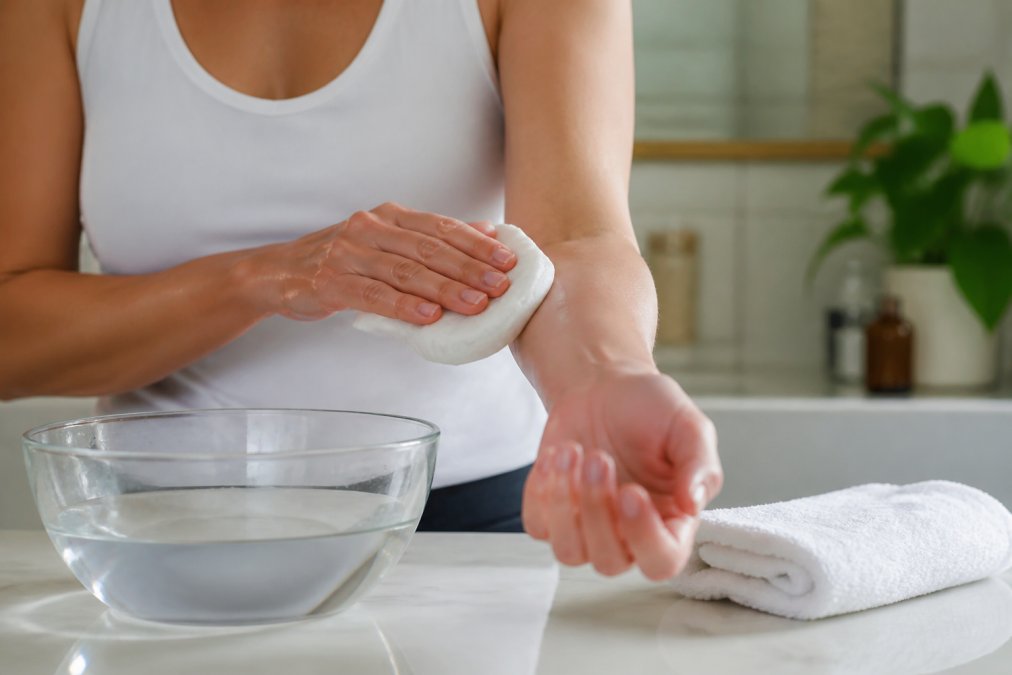
Here's how to do it safely:
- Soak a clean cloth in cool water and wring it out
- Press it gently on the itchy area for 10 to 15 minutes
- Pat dry, don't rub
- Apply a fragrance-free moisturizer right away to lock in water
Cool Compresses, Ice Packs, and Bath Temperature
Never put ice directly on skin. Wrap it in a towel first. Ten minutes is plenty; longer can damage tissue.
The Best Natural Soap for Eczema Relief: What to Look For
The best natural soap for eczema relief is a fragrance-free, hypoallergenic cleanser that supports the skin barrier instead of stripping it. Look for short ingredient lists, no added perfume, and a pH close to skin's natural level. If a label lists "fragrance," put it back.
What to check before you buy:
- Fragrance-free, not just "unscented" (unscented can still contain masking scents)
- No harsh sulfates that foam heavily and dry skin out
- Few ingredients, so there's less to react to
- Patch tested on a small area first
Ingredients That Help vs. Ingredients That Hurt
Helpful ingredients support moisture retention and calm irritation:
- Glycerin and colloidal oatmeal
- Shea butter and ceramides
- Aloe vera and chamomile
Ingredients to avoid break down the barrier or trigger reactions:
- Synthetic fragrance and dyes
- Benzocaine and other "-caine" numbing agents, which can sensitize skin
- Alcohol-based toners
Herbal and Natural Ointments: Calendula, Chamomile, Aloe, and Turmeric
Herbal ointments can calm irritated skin, but they work best as support, not a cure. The evidence for most botanicals is modest, so treat them as comfort tools that soothe while your barrier repairs.
- Calendula is a gentle anti-inflammatory, good for cracked or raw skin
- Chamomile calms redness and has mild soothing properties
- Aloe vera cools and hydrates, best for hot, angry patches
- Turmeric contains curcumin, which may ease inflammation when used topically
Nighttime Itch Management: How to Sleep Through the Itch
Nighttime is when itch wins, and it is not a coincidence. Three things happen after dark, each turning up the volume on chronic itching.
A Step-by-Step Bedtime Protocol
Most people with chronic itch benefit from a repeatable sequence rather than random tips. Here is one that addresses each nocturnal trigger:
- Lukewarm bath or shower, 60-90 minutes before bed. This lowers skin temperature and hydrates the outer layer. Hot water backfires, it strips lipids and raises core temperature, delaying sleep and worsening itch.
- Pat dry, then moisturize within three minutes. Skin is still damp and the moisturizer traps that water. Use a thick, fragrance-free cream or ointment, not a lotion, which is mostly water and evaporates.
- Reapply a thin layer right before bed. This layer carries you through the first sleep cycle, when cortisol is still relatively high.
- Keep the bedroom cool, roughly 60-67°F (15-19°C) if you can tolerate it. Cool air reduces skin temperature and nerve firing.
- Use breathable cotton or bamboo sheets. Synthetic blends trap heat and sweat against the skin.
- Trim nails short and file the edges smooth. You will still scratch in your sleep; the goal is to reduce the damage.
- Wear soft cotton gloves or breathable mitts if you scratch at night. Some people also use long-sleeved cotton pajamas to protect the arms and torso.
What to Do When You Wake Up Scratching
Willpower does not work at 3 a.m. The itch-scratch cycle is already running, and trying to "just not scratch" usually makes the urge worse. Instead, run a reset:
- Get out of bed. Do not stay in the loop.
- Apply a cool, damp compress to the itchy area for 5-10 minutes. Cold numbs the nerve endings that carry the itch signal and constricts blood vessels, reducing redness.
- Re-moisturize while the skin is still slightly damp.
- If the itch is still loud, take a brief walk or do a few slow breathing cycles. The goal is to interrupt the nerve loop, not to fall back asleep instantly.
- Return to bed only when the urge has dropped.
The Behavioral Side of Nocturnal Itch
Most articles stop at pillows and pajamas. The bigger lever is behavioral. Chronic scratching is a habit loop, itch, scratch, brief relief, more itch, and habits are strongest when you are tired and your executive control is lowest. Two techniques help:
- Habit reversal. When you notice the urge to scratch, substitute a competing action: press, tap, or gently pinch the area through fabric for 10 seconds. This satisfies the sensory urge without breaking the barrier.
- Trigger journaling. For one week, note the time you wake up itching and what you were doing before bed. Patterns show up fast, a late spicy meal, a hot shower, a stressful call, and each pattern you remove is one fewer 3 a.m. wake-up.
Diet, Supplements, and Lifestyle Changes That Reduce Flare-Ups
Diet and lifestyle changes can lower how often you flare, but they rarely fix itching on their own. Think of them as turning down the volume on your immune response, not switching it off. Below is what has evidence behind it, what is traditional but unproven, and what to avoid, because "natural" is not the same as "safe" or "effective."
The Evidence Hierarchy: What Actually Helps
Not all natural interventions are equal. Here is a practical ranking based on support in dermatology literature and clinical practice.
Strong support (worth trying first):
- Barrier moisturizing with ceramides or colloidal oatmeal. The single most evidence-backed natural step for chronic itch. It repairs the lipid barrier, reduces water loss, and lowers the irritant reaching your nerves.
- Lukewarm, short bathing. Consistently recommended by dermatology organizations for eczema and chronic itch.
- Stress reduction. Psychological stress reliably raises inflammatory markers and lowers the itch threshold, a measurable physiological lever, not a soft recommendation.
Moderate support (reasonable to try, modest effect):
- Omega-3 fatty acids from fish or flax. Some people see reduced skin inflammation; results are inconsistent.
- Vitamin D if blood levels are low. Low vitamin D is common with chronic skin conditions, but supplementing when levels are normal does not reliably reduce itch.
- Probiotics. Emerging evidence for skin health; strain and dose matter, and results vary widely.
Traditional use, weak evidence (comfort tools, not treatments):
- Turmeric (curcumin) topically. Anti-inflammatory in lab studies, but skin absorption is poor unless formulated carefully.
- Calendula, chamomile, and aloe vera. Soothing, low risk for most people, but they do not repair the barrier or change the underlying condition.
- Colloidal oatmeal baths. Comforting and mildly anti-itch; the effect is temporary.
Skip or be skeptical:
- Any product claiming to "cure" a chronic skin condition. Chronic itch is managed, not cured by a single product.
- Homeopathic preparations. Most contain no active plant material. They are not the same as herbal remedies.
- High-dose "detox" or "cleanse" kits. No evidence for chronic itch, and some can irritate the gut and skin.
Dietary Patterns: What the Pattern Shows
There is no single anti-itch diet, but a few patterns show up repeatedly in people who track symptoms:
- Alcohol dilates blood vessels and can trigger flushing and itching within minutes in sensitive people.
- Spicy food activates the same nerve receptors (TRPV1) that heat does, amplifying itch.
- High-sugar, highly processed meals are linked to higher systemic inflammation over time.
- Individual food triggers exist but are less common than people assume. True food-triggered itch is most often seen in children with eczema and specific allergies.
Supplements: Doses, Forms, and Cautions
If you and your doctor decide to try a supplement, know this before you buy.
- Vitamin D3. Typical over-the-counter doses range from 1,000-2,000 IU daily. Higher doses need medical supervision, because vitamin D is fat-soluble and can accumulate. Ask for a blood test first.
- Omega-3 (EPA/DHA). Commonly studied ranges are around 1-2 grams per day of combined EPA and DHA. Fish oil can interact with blood thinners, check with your doctor if you take warfarin, aspirin, or clopidogrel.
- Probiotics. Look for named strains (for example, Lactobacillus or Bifidobacterium species) rather than a vague "blend." Strain and CFU count matter, and effects are individual.
Lifestyle Habits That Actually Move the Needle
- Manage stress deliberately. Sleep, movement, and slow breathing lower the inflammatory load that feeds chronic itch. Even 10 minutes of daily breathing practice shows up in symptom logs for many people.
- Keep showers short and lukewarm. Hot water strips the barrier and sets up the next flare.
- Wear loose, soft clothing. Wool, rough seams, and synthetic blends create friction that triggers itch.
- Use a humidifier in dry rooms. Low humidity pulls water out of the skin and worsens barrier damage.
- Change one variable at a time. Change five products in a week and you cannot tell which one helped. One change, one week, then evaluate.
When to See a Dermatologist (and What to Ask)
See a dermatologist if itching lasts more than two weeks, disrupts sleep, or comes with spreading rash, oozing, or weight loss. Those signs need a proper diagnosis, not another cream.
Ask these questions at your visit:
- What is my actual diagnosis, and how was it confirmed?
- Which ingredients should I avoid in skincare?
- Do I need a prescription, or will barrier care be enough?
- What warning signs mean I should come back sooner?
- Can you recommend a fragrance-free routine I can stick with?
Conclusion: Building Your Natural Relief Routine
Natural relief for chronic skin itching works when you treat it as a routine, not a rescue. Cool the skin, protect the barrier, avoid triggers, and manage the night. Do those four things consistently and most people see fewer flares and calmer skin.
Frequently Asked Questions
What is my body lacking if my skin is itchy?
Chronic itching often signals a compromised skin barrier, which can stem from low vitamin D, essential fatty acid deficiency, or dehydration. A 2018 review in Nutrients noted vitamin D's role in skin barrier repair and immune response. Other factors include dry air, harsh soaps, and underlying conditions like atopic eczema or neurodermatitis. A dermatologist can run blood tests to check for deficiencies before you add supplements.
What is the best remedy for extremely itchy skin?
A cool compress applied for 10-15 minutes reduces inflammation and numbs nerve endings quickly. Follow with a fragrance-free emollient to lock in moisture. For persistent itching, a colloidal oatmeal bath or a topical hydrocortisone cream (short-term) can help. If itching disrupts sleep or lasts more than two weeks, see a dermatologist to rule out chronic conditions like dyshidrotic eczema or neurodermatitis.
How can I stop chronic itching at night?
Nighttime itching worsens because body temperature rises and cortisol drops. Keep your bedroom cool (18-20°C), shower with lukewarm water before bed, and apply a thick emollient within three minutes of patting dry. Wear loose cotton pajamas and keep nails short to limit damage from unconscious scratching. A cool compress on the itchy area before sleep can calm the itch-scratch cycle.
Are there natural ways to restore the skin barrier?
Yes. Use a gentle, fragrance-free cleanser like a natural soap for eczema relief that contains plant-based ingredients and no harsh surfactants. Apply emollients containing ceramides, shea butter, or calendula immediately after bathing to reduce transepidermal water loss. Avoid hot water, wool fabrics, and synthetic fragrances. A 2020 study in the Journal of Clinical Medicine found that restoring barrier lipids reduces itch intensity in atopic eczema.
Compartir esta publicación
- Etiquetas: best natural soap for eczema relief, causes of persistent skin itching, how to soothe inflamed skin naturally, natural relief, natural relief for chronic skin itching