

Best Debriding Soap: A 2026 Guide to Deep Skin Cleansing
Posted by Editorial Team on
Table of Contents
- What Makes a Debriding Soap the Best Choice for Debris Removal
- How to Use Debriding Soap for Wound Hygiene and Daily Cleansing
- Benefits of Bio-Form Carbon Soap for Skin Barrier and Debris Removal
- Best Antibacterial Soap for Skin Irritation: Key Ingredients to Look For
- Comparative Safety Profiles: Debriding Soap vs. Antiseptic Washes
- Post-Debridement Skin Care and Managing Inflammation
- Frequently Asked Questions
Last Updated: September 29, 2026
What Makes a Debriding Soap the Best Choice for Debris Removal
The best debriding soap removes debris, dead skin cells, and surface irritants without stripping the skin's natural barrier.
Debriding soap is a cleansing product formulated to loosen and lift debris from the skin surface and pores. Unlike harsh scrubs or strong antiseptic washes, a quality debriding soap supports wound hygiene while respecting the skin barrier.
Most people searching for the best debriding soap have already tried conventional cleansers. They've used drugstore antibacterial bars. They've tried prescription washes. And they're still dealing with irritation, buildup, or slow healing. The problem usually isn't effort. It's the formula.
Three things separate a debriding soap that works from one that makes things worse:
- Particle size and penetration. Smaller particles reach deeper into pores without abrasion.
- Surfactant balance. Effective cleansers lift debris while leaving the skin's lipid layer intact.
- pH compatibility. Skin sits around pH 4.5 to 5.5. Cleansers outside that range disrupt the barrier.
How to Use Debriding Soap for Wound Hygiene and Daily Cleansing
Using debriding soap correctly matters as much as choosing the right one. Overuse causes irritation. Underuse leaves debris behind. The goal is consistent, gentle cleansing that supports wound bed preparation without damaging surrounding skin.
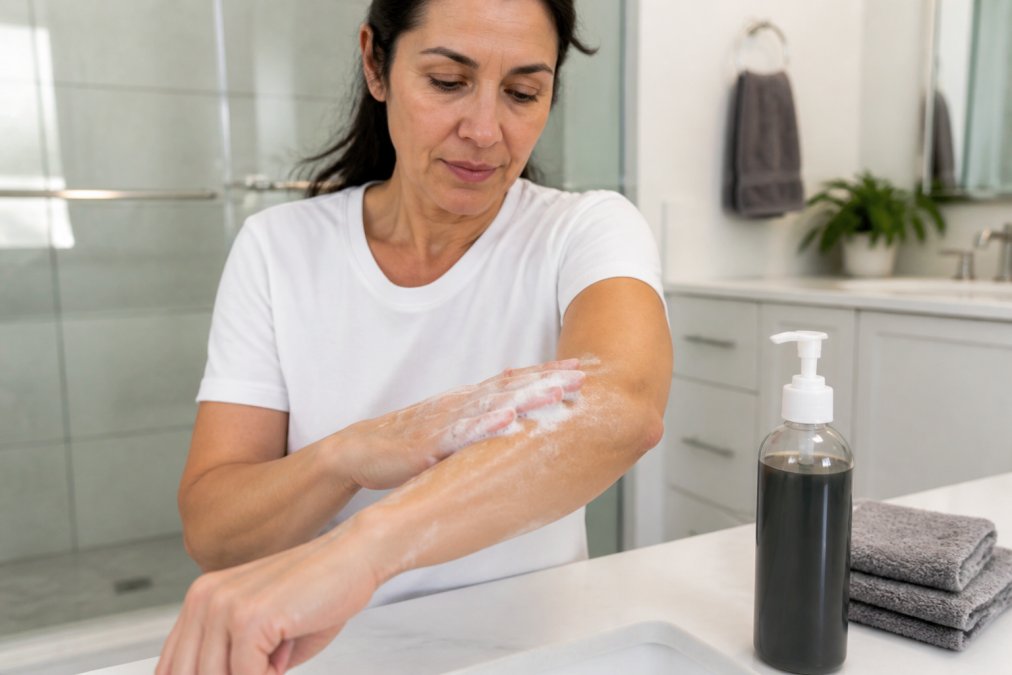
For daily cleansing, wet the skin with lukewarm water, apply a small amount of soap, and work it in with fingertips using light circular motions. Rinse thoroughly. Pat dry with a clean towel. Do not scrub.
For wound hygiene, the process is similar but slower. Clean from the center of the area outward. Use a fresh towel each time. If the wound is open or showing signs of infection, stop and speak with a healthcare professional before continuing.
Step-by-Step Application for Sensitive or Irritated Skin
- Wash your hands thoroughly before touching the affected area.
- Test the soap on a small patch of healthy skin first. Wait 24 hours.
- Use lukewarm water. Hot water strips the skin barrier and increases inflammation.
- Apply a small amount and lather gently with clean fingertips.
- Leave the lather on the skin for 30 to 60 seconds.
- Rinse completely. Residue left behind can act as an irritant.
- Pat dry. Never rub.
- Follow immediately with a moisturizing product while skin is still slightly damp.
A common mistake is increasing frequency when results feel slow. More cleansing does not mean faster healing. It usually means more irritation. Stick to once or twice daily unless a clinician tells you otherwise.
Benefits of Bio-Form Carbon Soap for Skin Barrier and Debris Removal
Bio-form carbon soap uses a liquid carbon base rather than the solid charcoal found in most "charcoal" cleansers. Get Your Life Back LLC's Nature's Gift® Debriding Soap relies on a proprietary liquid bio-form carbon process, with a particle size of 6 angstroms (0.6 nanometers). That scale matters.
How Bio-Form Carbon Works: The Mechanism in Plain Language
Most debriding cleansers rely on surfactants to lift debris, or on physical exfoliants to scrub it away. Bio-form carbon takes a different approach. At 6 angstroms, the carbon particles are smaller than the gaps between skin cells and far smaller than a pore. This allows them to penetrate the skin surface without abrasion and bind to debris through adsorption, a process where particles stick to the surface of impurities and lift them away when rinsed.
Think of it like a magnet for microscopic dirt: the carbon particles attract and hold onto oils, dead cells, and environmental residue, then get washed away with water.
The liquid form also means the carbon is already suspended in a hydrating base. The result is deep cleaning that supports dermal integrity.
What This Means for Your Skin Barrier
A healthy skin barrier is like a brick wall: skin cells are the bricks, and lipids (fats) are the mortar. Bio-form carbon soap is designed to clean the surface. Because it doesn't rely on harsh sulfates or high pH, it helps maintain the skin's natural pH around 4.5 to 5.5 and preserves the lipid barrier.
Benefits of bio-form carbon soap include:
- Deep cleaning that removes debris from pores without abrasion
- Hydration that leaves skin feeling soft rather than tight
- Support for normal skin function and a healthier-looking barrier
- Reduced appearance of wrinkles over consistent use
- Improved skin luminescence and overall tone
The formula is also non-comedogenic and hypoallergenic, which matters if you've reacted badly to other cleansers. It's built from renewable plant-based ingredients, so it fits a plant-based skincare routine without compromise.
Best Antibacterial Soap for Skin Irritation: Key Ingredients to Look For
The best antibacterial soap for skin irritation balances antimicrobial action with gentleness. But the right choice depends heavily on what you're treating, a minor scrape, a surgical incision, or a chronic wound all have different needs.
Matching Ingredients to Wound Types: A Safety Guide
Not all wounds are the same, and the ingredients that help one can harm another. Here's how to think about common wound types:
- Minor abrasions and everyday cuts: These have intact surrounding skin and low infection risk. A gentle, pH-balanced debriding soap with soothing agents (like aloe or glycerin) is usually sufficient. Avoid harsh antiseptics like hydrogen peroxide or full-strength chlorhexidine, which can irritate healthy tissue and delay healing.
- Surgical wounds and stitches: These are clean but vulnerable. Your surgeon's instructions override everything else. In general, mild, non-irritating cleansers are preferred. Antiseptic washes may be recommended short-term, but prolonged use can disrupt healing. Never use scrubs or exfoliants on or near surgical sites.
- Chronic wounds (e.g., diabetic ulcers, pressure sores): These require clinical supervision. Debriding soaps can help remove debris, but the wound bed is fragile. Antimicrobial ingredients like diluted sodium hypochlorite (Dakin's solution) or cadexomer iodine may be used under medical guidance. Over-the-counter antibacterial soaps are not a substitute for prescribed wound care.
- Eczema, psoriasis, or keratosis pilaris: These are inflammatory conditions, not wounds. Harsh antibacterial formulas can trigger flares. Look for non-soap cleansers with ceramides or colloidal oatmeal. Avoid fragrance, alcohol, and strong surfactants.
Ingredient Categories: What to Look For and What to Avoid
When reading labels, look for these ingredient categories:
| Ingredient Type | What It Does | Watch For |
|---|---|---|
| Surfactants | Lift debris and oils from skin | Harsh sulfates (e.g., sodium lauryl sulfate) that strip the barrier |
| Soothing agents | Calm redness and irritation | Alcohol-heavy formulas that dry skin |
| Antimicrobials | Reduce bacterial load | Overly concentrated actives (e.g., benzoyl peroxide >5%) |
| Humectants | Pull moisture into the skin | Formulas with no moisturizing component |
| pH balancers | Keep skin near pH 4.5 to 5.5 | Highly alkaline bars (pH >7) |
Common antimicrobial ingredients include chlorhexidine, benzoyl peroxide, and sodium hypochlorite. Each has a legitimate role in clinical settings, but each also carries trade-offs. Chlorhexidine can irritate sensitive skin and is not for use on mucous membranes. Benzoyl peroxide is effective against acne-causing bacteria but notoriously drying and can bleach fabrics. Sodium hypochlorite, at diluted concentrations, is used in wound care but must be handled carefully and is typically reserved for specific clinical situations.
For everyday use on irritated skin, a gentler approach usually works better.
Comparative Safety Profiles: Debriding Soap vs. Antiseptic Washes
Debriding soap and antiseptic washes serve different purposes, and confusing them causes problems. Debriding soap lifts debris and supports gentle cleansing. Antiseptic washes target microorganisms.
Safety profiles differ in three key areas:
- Frequency of use. Debriding soaps are designed for regular use. Antiseptic washes are typically for short-term or targeted use.
- Impact on skin flora. Antiseptics can disrupt the skin's natural microbiome. Debriding soaps generally preserve more of it.
- Irritation risk. Antiseptic washes carry higher irritation risk with repeated use, especially on compromised skin.
Post-Debridement Skin Care and Managing Inflammation
What you do after cleansing determines whether the process helps or hurts. Post-debridement skin is more receptive to moisturizing, but it's also more vulnerable to irritants. The window right after cleansing is when the skin barrier needs the most support.
Follow these steps after every debriding session:
- Moisturize immediately. Apply a soothing moisturizer while skin is still damp.
- Avoid fragrances and dyes. These are common irritants on freshly cleansed skin.
- Skip exfoliating acids for 24 hours. Let the skin recover before adding active ingredients.
- Protect the area. Loose clothing over treated skin reduces friction and irritation.
- Watch for changes. Increased redness, swelling, or pain means stop and reassess.
Frequently Asked Questions
What is the soap that surgeons use to scrub in?
Surgeons typically use antiseptic soaps containing chlorhexidine gluconate or povidone-iodine for surgical scrubs. These are stronger than everyday debriding soaps and are designed for sterile technique. For home use on irritated or sensitive skin, a gentler debriding soap like Nature's Gift® is more appropriate. It removes debris and supports wound hygiene without stripping the skin barrier.
How does bio-form carbon soap help with skin debris?
Bio-form carbon soap uses liquid bio-form carbon particles that are 6 angstroms (0.6 nanometers) in size. These tiny particles penetrate pores to lift and remove debris, excess oil, and irritants. This process is non-comedogenic and hypoallergenic, making it suitable for individuals with eczema, psoriasis, or persistent skin irritations. It supports normal skin function.
Can debriding soap be used on open wounds?
Debriding soap is generally not intended for open wounds unless specifically formulated for that purpose. For open wounds, a healthcare professional should recommend a sterile wound cleanser. Debriding soaps can be used for intact skin with debris, irritation, or chronic conditions like eczema or psoriasis. Always consult a doctor before using any soap on broken skin to avoid infection or delayed healing.
Is debriding soap safe for sensitive skin and eczema?
Yes, many debriding soaps are designed for sensitive skin. Look for non-soap cleansers that are pH-balanced, hypoallergenic, and free of harsh surfactants. Ingredients like bio-form carbon can support healthy skin function. Patch-test first, and if irritation persists, consult a dermatologist or pharmacist for personalized advice.
Share this post
- Tags: benefits of bio-form carbon soap, best antibacterial soap for skin irritation, best debriding soap, debriding soap, how to use debriding soap