

Why Carbon-Based Skin Cleansers Work and What to Know
Posted by Editorial Team on
Quick Summary
Carbon based cleansers work because activated carbon has a very large porous surface that attracts and holds onto oil, dirt and debris on the skin, lifting them away when rinsed. They clean the skin's surface but do not penetrate pores, change oil production, or treat acne on their own. Choose one with mild surfactants and patch test first.
- Activated carbon works mainly through adsorption, so it binds to oil and debris rather than soaking into the skin.
- Surfactants do most of the cleansing work; carbon adds surface adsorption on top.
- Carbon cleansers cannot change sebum production or treat acne-causing follicular processes.
- Use once or twice daily, keep contact to 30 to 60 seconds, and avoid scrubbing.
- Patch test on the jawline for three to five days, and stop if skin feels tight, stings or flakes.
Table of Contents
- What Activated Carbon Is and How It Is Made
- How Carbon Interacts with Oil, Dirt, and Debris on the Skin
- Activated Charcoal Face Wash for Oily Skin: What Carbon Can and Cannot Do
- Activated Charcoal Cleanser for Acne-Prone Skin and Its Limits
- Carbon Facial Side Effects, Irritation Risks, and Skin-Type Guidance
- Carbon-Based Cleanser vs Regular Cleanser: How to Choose and Use One
- Trying a Carbon Cleanser: Your Next Step
- Frequently Asked Questions
Carbon-based skin cleansers are built around one idea: activated carbon attracts and holds onto oil and debris on the skin's surface, and carbon based cleansers are a popular choice for that reason. The question is what that means for your face in practice, and where the claims outrun the evidence. Get Your Life Back LLC makes a carbon-based line built around liquid bio-form carbon, and we will try to be clear about what carbon can and cannot do.
Reviews on activated carbon's adsorption properties in dermatology
What Activated Carbon Is and How It Is Made
Activated carbon is a form of carbon processed to create a very large internal surface area. For more on its form and benefits, read the liquid bio-form carbon guide. Its effectiveness comes from that porous structure.
Adsorption versus absorption explained
Adsorption is the process by which molecules adhere to a surface. Absorption is the process by which a substance is taken into the bulk of another material. Carbon works mainly through adsorption, which is why it attaches to oils and particles on the skin rather than soaking into it.
How Carbon Interacts with Oil, Dirt, and Debris on the Skin
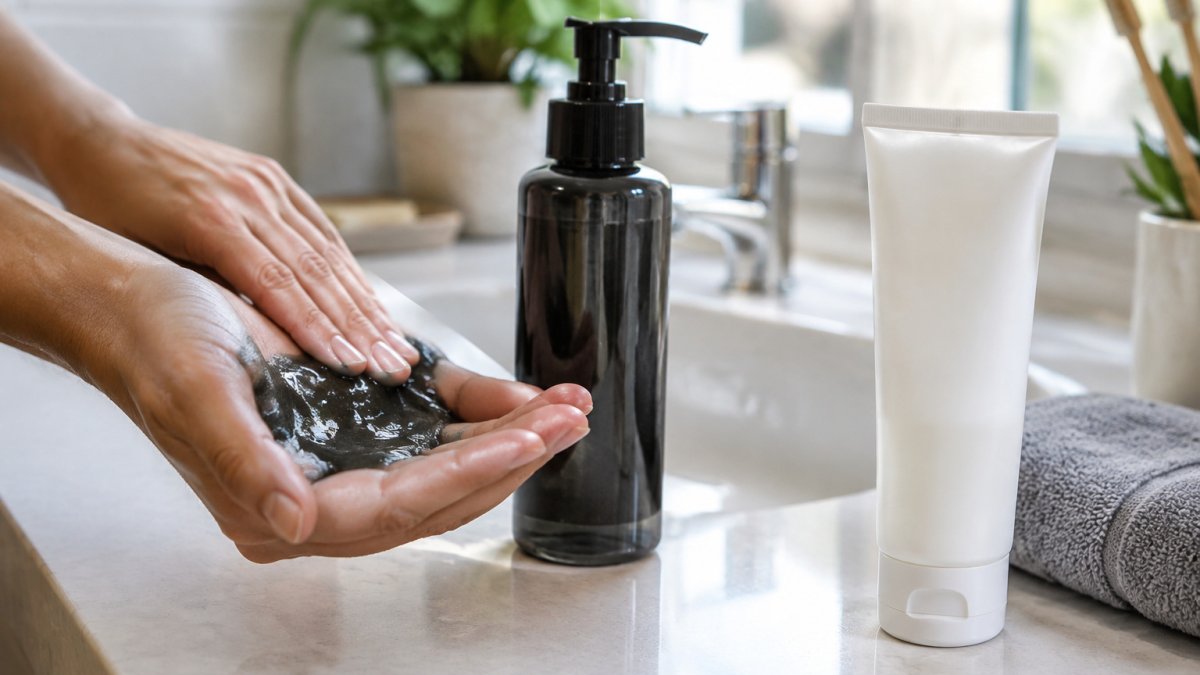
Carbon based cleansers are designed to bind to sebum, dirt, and surface debris, then lift them away when rinsed. To go deeper on how liquid bio-form carbon deep cleans pores, read the full guide. Because the carbon attaches to these materials rather than to skin cells, the mechanism is primarily about surface cleansing.
Overview of cleansing mechanisms in topical skincare
Activated Charcoal Face Wash for Oily Skin: What Carbon Can and Cannot Do
People with oily skin often reach for carbon cleansers because they seem to pull oil out of pores. Carbon can remove surface oil effectively. It cannot change how much sebum your glands produce, and a cleanser that leaves skin feeling tight may be stripping more than is helpful.
Activated Charcoal Cleanser for Acne-Prone Skin and Its Limits
Acne-prone skin is where carbon cleanser marketing runs furthest ahead of the evidence. A rinse-off carbon cleanser can remove surface sebum, sweat residue, and loosely adherent debris, and the mechanical action of rinsing can help loosen dead skin cells at the surface. That is a real but modest contribution. It does not sterilize the follicle, it does not dissolve a comedo, and it does not reach the sebaceous gland to change how much oil is produced.
The mechanism matters here. Acne involves four overlapping processes: increased sebum production driven by hormones, abnormal keratinization inside the follicle, colonization by Cutibacterium acnes, and inflammation. A cleanser acts on the surface. It can reduce the oil film that makes skin feel greasy and can remove some surface bacteria, but it cannot normalize follicular keratinization or calm inflammation inside the pore. That is why dermatology guidance treats cleansing as supportive care, not as acne treatment. Ingredients with better evidence for acne include salicylic acid (a lipophilic beta hydroxy acid that penetrates the follicle to help shed dead cells), benzoyl peroxide (which reduces C. acnes), and retinoids (which normalize keratinization). A carbon cleanser can sit alongside these, but it does not replace them.
Where carbon cleansers can genuinely help acne-prone skin is in the cleansing step itself. People with oily, acne-prone skin often over-cleanse with harsh surfactants, which strips the barrier and can trigger rebound oiliness and irritation. A well-formulated carbon cleanser that uses mild surfactants and a modest amount of carbon can remove surface oil without the tight, squeaky feeling that signals over-stripping. The carbon is a supporting ingredient; the surfactant system does most of the cleansing work.
Watch out: abrasive carbon scrubs and daily use of strongly foaming carbon washes can aggravate inflammatory acne by increasing friction and barrier disruption. If a carbon cleanser leaves skin red, tight, or flaky, it is too harsh for daily use regardless of the carbon content.
Practical guidance for acne-prone skin: use a carbon cleanser once or twice daily at most, keep the contact time brief (rinse within 30 to 60 seconds), avoid scrubbing, and follow with a non-comedogenic moisturizer. If you are using an active acne treatment, layer it after cleansing rather than mixing it into the cleanser. Give any new cleanser two to four weeks before judging results, and stop if irritation worsens. If acne is inflammatory, cystic, or scarring, a cleanser is not the right lever; see a dermatologist for treatment that reaches the follicle.
The table below summarises what a carbon cleanser can and cannot do for acne-prone skin, and which ingredients have better evidence.
| Approach | Role for acne-prone skin | Limit |
|---|---|---|
| Carbon cleanser | Removes surface sebum and loose debris | Does not reach the follicle or change oil production |
| Salicylic acid | Penetrates follicle to help shed dead cells | Can dry or irritate skin |
| Benzoyl peroxide | Reduces C. acnes bacteria | Can bleach fabric and irritate skin |
| Retinoids | Normalize follicular keratinization | Can cause initial redness and peeling |
| Gentle cleanser use | Limit contact to 30-60 seconds, once or twice daily | Scrubbing or over-cleansing can aggravate acne |
Carbon Facial Side Effects, Irritation Risks, and Skin-Type Guidance
Carbon cleansers can cause dryness or irritation, particularly on sensitive or compromised skin. Patch test before full use, and avoid harsh scrubbing with any carbon product. If you have eczema, psoriasis, or another diagnosed skin condition, check with a dermatologist before adding a new cleanser.
Guidance on choosing gentle cleansers for sensitive skin
Carbon-Based Cleanser vs Regular Cleanser: How to Choose and Use One
The honest comparison is that a carbon cleanser is a regular cleanser with carbon added. You can see the actual mask cleaner product to compare its ingredients against your current cleanser. The cleansing work is done by the surfactant system, the same class of ingredients (cocamidopropyl betaine, sodium cocoyl isethionate, glycerin, and similar mild surfactants) that lift oil and dirt in any rinse-off product. Carbon contributes adsorption at the surface, which can help bind some sebum and particulate debris, but it is not a substitute for surfactants and it does not penetrate the pore. If a carbon cleanser is poorly formulated, harsh surfactants, high pH, abrasive particles, the carbon does not rescue it.

That framing gives you a practical way to choose. Read the ingredient label in this order: surfactants first (are they mild or stripping?), then carbon position (early enough to be meaningful, but not so high that the product is a gritty paste), then added actives (salicylic acid, niacinamide, or none), then fragrance and preservatives (common irritation triggers for sensitive skin). A carbon cleanser with mild surfactants and carbon in the top third of the list is doing what the category promises.
Compare it with alternatives by purpose rather than by hype. For a checklist on buying natural soap for deep skin cleaning, including pH and patch testing, see that guide. A gentle non-carbon surfactant cleanser is the default for most skin types and is the safest choice for dry or sensitive skin. A salicylic acid cleanser is the better pick when the goal is follicular exfoliation for blackheads and mild acne. A carbon cleanser sits between them: useful for oily skin that wants surface oil control and a light detox-style cleanse, but not a treatment for acne or a replacement for an active. None of these are mutually exclusive; many routines rotate a gentle cleanser with a carbon or salicylic cleanser a few times a week.
How to use one without overdoing it: start with once daily, ideally in the evening to remove sunscreen and surface oil, and use a gentle non-carbon cleanser in the morning if skin feels dry. Use lukewarm water, lather in hands rather than scrubbing on the face, and rinse thoroughly. Patch test on the jawline for three to five days before full-face use, especially if you have sensitive skin or a history of eczema or rosacea. Watch out: if skin feels tight, stings, or flakes after use, the product is too harsh for your barrier, reduce frequency or switch to a milder non-carbon cleanser rather than layering more products on top.
A simple routine that turns the claims into something actionable: evening, carbon cleanser (once daily), moisturizer, and any prescribed or chosen active applied after cleansing; morning, rinse with water or a gentle non-carbon cleanser, moisturizer, sunscreen. Reassess after four weeks. If oil control and texture have not changed, the carbon cleanser is not adding value for your skin and a plain gentle cleanser plus a targeted active is the better use of your routine budget.
Trying a Carbon Cleanser: Your Next Step
If you want to try a carbon cleanser, start with a small amount, patch test for several days, and watch how your skin responds. The Nature's Gift Bioform Carbon Cleanse Spray is available anchor text: buy the carbon cleanse spray if you want to test it.

Get Your Life Back LLC builds its skincare around liquid bio-form carbon, and we are happy to answer questions about how our products are used. Browse our range to find the option that fits your routine.
Frequently Asked Questions
What are the side effects of a carbon facial?
Carbon facials can cause redness, dryness, tightness, or irritation, particularly on sensitive or compromised skin. Because the carbon is usually applied to dry skin and then removed, some people feel a stinging or tingling sensation during rinsing. Stop using the product if irritation persists, and patch test on a small area first. Anyone with eczema, rosacea, active acne, or a diagnosed skin condition should check with a healthcare provider before starting a new cleansing routine.
Can carbon-based cleansers help oily skin?
Carbon-based cleansers are designed to bind oil and surface debris through adsorption, so they can leave oily skin feeling cleaner after washing. However, they do not reduce sebum production or shrink pores over time. Their effect is limited to what is on the surface at the moment of cleansing. Most people with oily skin still benefit from a regular routine that includes a gentle cleanser, a non-comedogenic moisturizer, and sun protection.
How do carbon-based cleansers compare with regular face washes?
Regular face washes rely mainly on surfactants to lift oil and dirt, while carbon-based cleansers add activated carbon that adsorbs particles onto its porous surface. Carbon cleansers are often marketed for deeper cleaning, but the clinical evidence for better outcomes is limited. A standard gentle cleanser is usually sufficient for daily use, and a carbon product may suit people who want an extra cleansing step, provided their skin tolerates it.
Are carbon-based cleansers suitable for sensitive or acne-prone skin?
They can be, but results vary. Carbon may help remove surface oil and debris for some people with acne-prone skin, though it does not treat the underlying causes of breakouts such as hormonal activity or clogged follicles. Sensitive skin is more likely to react to added fragrances, essential oils, or drying ingredients in a formula, so check the full ingredient list. Use once daily at most at first and watch for dryness or redness.

Share this post
- Tags: activated charcoal cleanser for acne-prone skin, activated charcoal face wash for oily skin, carbon based cleansers, carbon facial side effects, carbon-based cleanser vs regular cleanser, why use carbon based skin cleansers