

How to Buy Natural Soap for Deep Skin Cleaning
Publicado por Editorial Team en
Table of Contents
- Start Here: What Deep Cleaning Can and Cannot Do for Your Skin
- How to Choose Soap for Your Face vs Your Body
- Natural Soap for Sensitive Skin: Patch Testing and Stop Signals
- Charcoal Soap for Deep Cleansing: What It Does and What to Check
- Deep Cleansing Soap for Blemish-Prone Skin: Matching Formula to Concern
- How to Read a Natural Soap Label and Price Before You Buy
- Step-by-Step: Using Natural Soap for Deep Skin Cleaning
- Common Mistakes That Wreck a Deep-Cleaning Routine
- Frequently Asked Questions
Last Updated: October 7, 2026
Start Here: What Deep Cleaning Can and Cannot Do for Your Skin
Deep cleansing is the process of lifting oil, dead skin cells, sweat residue, and environmental particles off the skin's surface without stripping the barrier that protects it.
That gap between what a cleansing bar removes and what it cannot fix is where most buying decisions go wrong.
Below, we break down what a deep-cleansing bar does, how to match a formula to your face and body, and how to read a label before buying.
What a Deep-Cleansing Bar Actually Removes
A well-made cleansing bar removes four things: excess sebum, dead surface cells, trapped debris in pore openings, and residue from sunscreen, sweat, or lotions. Skin cleaned this way looks smoother and less congested, and pores appear smaller because the material in them is gone.
It does not penetrate the bloodstream, extract substances from tissue, or address an internal condition. Any product claiming otherwise is overselling. The realistic benefit is a cleaner surface and a calmer-looking complexion.
What It Cannot Fix (and What to Stop Expecting)
A cleansing bar cannot diagnose or treat a medical skin condition, nor resolve itching that originates below the skin. For a persistent, unexplained problem, soap is a support tool, not a solution.
Stop expecting a bar to:
- Cure a chronic skin condition on its own
- Replace prescribed treatment
- Work identically on every skin type
How to Choose Soap for Your Face vs Your Body
The best soap for your face is not the same bar you use on your body. Facial skin is thinner, has more sebaceous glands per square centimetre, and sits closer to the eyes and mouth, so it reacts faster to harsh ingredients.
The biggest buying error we see: people find a bar they like, use it everywhere, then their face breaks out or tightens while their body feels fine.
Face Soap, Body Soap, and Why the Difference Matters
When you are learning how to choose soap for your face, prioritise these traits:
- Mild surfactants that clean without stripping
- Low or no fragrance if your skin is reactive
- Non-comedogenic formulas that will not clog pores
For the body, you have more room: a bar with tea tree, eucalyptus, or a light botanical scent works well on arms, legs, and back, where skin is more resilient.

Natural Soap for Sensitive Skin: Patch Testing and Stop Signals
Natural soap for sensitive skin still needs a patch test.
Here is how we would run a patch test:
- Wash a small area on your inner forearm with the bar
- Rinse and pat dry
- Wait 24 hours without applying anything else to that patch
Stop immediately if you notice swelling, spreading redness, burning that lasts more than a few minutes, or new bumps. These are stop signals, not "adjustment periods."
If you have a diagnosed skin condition, run any new product past your clinician first. A patch test tells you about irritation, not how a product interacts with an ongoing condition.
Charcoal Soap for Deep Cleansing: What It Does and What to Check
Charcoal soap for deep cleansing works by adsorption: carbon particles bind to oil and debris on the skin's surface so they rinse away more easily. That is why carbon-based bars are popular for oily and congested skin. But charcoal is one of several deep-cleaning actives, and knowing how it compares to clay, herbs, and essential oils helps you choose the right bar.
How Charcoal Compares to Other Deep-Cleaning Actives
Here is how the main deep-cleaning actives actually differ:
- Charcoal adsorbs oil and surface debris. It is best for oily and congested skin. The limitation is that it only works on the surface; it does not penetrate pores or treat underlying conditions.
- Clay (bentonite, kaolin) absorbs excess oil and can temporarily reduce shine. It is gentler than charcoal for some skin types but can be drying if overused.
- Herbal extracts (tea tree, eucalyptus, chamomile) offer antimicrobial or soothing properties depending on the herb. Their effect depends heavily on concentration, which is often low in bar soap.
A bar combining charcoal with a mild base oil and low fragrance load is the most balanced choice for deep cleaning without stripping.

The Detail Most Buyers Miss: Particle Size
Coarse carbon grit does little beyond exfoliating; finer carbon disperses evenly and reaches into pore openings. Our flagship formula uses a proprietary liquid bio-form carbon with a particle size of 6 angstroms (0.6 nanometers), small enough to spread through the lather rather than scratch.
What to Check on a Charcoal Bar Before Buying
- Whether carbon appears early in the ingredient list
- Whether the bar also contains a mild base oil rather than a harsh detergent
- Whether it is labelled non-comedogenic
Deep Cleansing Soap for Blemish-Prone Skin: Matching Formula to Concern
Deep cleansing soap for blemish-prone skin should reduce excess oil without stripping the barrier, because stripped skin produces more oil in response. The goal is balance, not dryness.
Nature's Gift Tea Tree Oil Soap ( 4.5 oz each ) →
Match your formula to the concern:
| Skin Concern | What to Look For | What to Avoid |
|---|---|---|
| Oily, congested | Carbon or clay base, mild surfactants | Heavy butters, high fragrance |
| Acne-prone | Non-comedogenic, short ingredient list | Coconut oil as a top ingredient |
| Dry and flaky | Olive oil, shea butter, low lather | Strong exfoliants, hot water |
| Reactive or red | Unscented, minimal botanicals | Essential oils, fragrance oils |
For combination skin, treat zones separately: a firmer cleanse on the T-zone and a gentler pass on the cheeks beats one compromise product everywhere.
For anyone managing both a chronic condition and persistent itching, a fragrance-free bar is the safer starting point. Our unscented Nature's Gift bar is designed for deep cleaning and debris removal.

How to Read a Natural Soap Label and Price Before You Buy
A natural soap label tells you more than the front of the box. Read the ingredient list in order, because ingredients are listed by weight and the first three or four entries are the bulk of the bar. This is where you separate a genuinely deep-cleaning bar from a decorative one.
The Ingredient List, Decoded
Look for these categories in order:
- Base oils such as olive, safflower, castor, palm, or coconut oil. These form the bulk of the bar and determine how mild or stripping it feels.
- The cleansing agent, usually listed as saponified oils or sodium hydroxide. Sodium hydroxide is normal in true bar soap; it reacts with oils during saponification and is not present in the finished bar in a caustic form.
- Active additions like carbon, clay, tea tree, or botanical extracts. Their position in the list tells you how much is actually there.
A common pattern: bars promoting charcoal or clay list the active near the bottom, meaning low concentration. That is not automatically bad, but the deep-cleaning claim then rests more on marketing than on dose.
What 'Natural' and 'Non-Toxic' Claims Actually Mean
"Natural" describes the source of ingredients, not their safety or gentleness; essential oils, botanical extracts, and some plant oils are common irritants. "Non-toxic" is not a regulated skincare term, so any brand can print it.
Certifications are more useful because they have defined criteria. Look for recognized organic certifications if sourcing matters to you, and check whether the brand explains what "non-comedogenic" and "hypoallergenic" mean for that formula.
Ingredient Evidence: What the Popular Actives Can and Cannot Do
Here is what the evidence actually supports for the popular actives:
- Charcoal works by adsorption, binding oil and debris on the skin's surface so they rinse away. It does not pull toxins from the body or reach below the surface. Particle size matters: fine, dispersed carbon spreads through lather, while coarse grit mostly exfoliates.
- Clay (bentonite, kaolin) absorbs excess oil and can temporarily reduce shine. It is useful for oily and congested skin but can be drying if left on too long or used too often.
- Tea tree oil has some antimicrobial activity and is often included for blemish-prone skin. It can also irritate, especially at higher concentrations, so patch testing matters.
Price: What You Are Actually Paying For
Handmade and small-batch bars cost more than drugstore bars because ingredients and process cost more. Our Nature's Gift bars are priced at $10.95 for a 4.5 oz bar.
A Quick Label Checklist
- Base oils listed first, not fillers
- Active ingredients (charcoal, clay, tea tree) positioned where they can actually work
- Fragrance named specifically or absent
Step-by-Step: Using Natural Soap for Deep Skin Cleaning
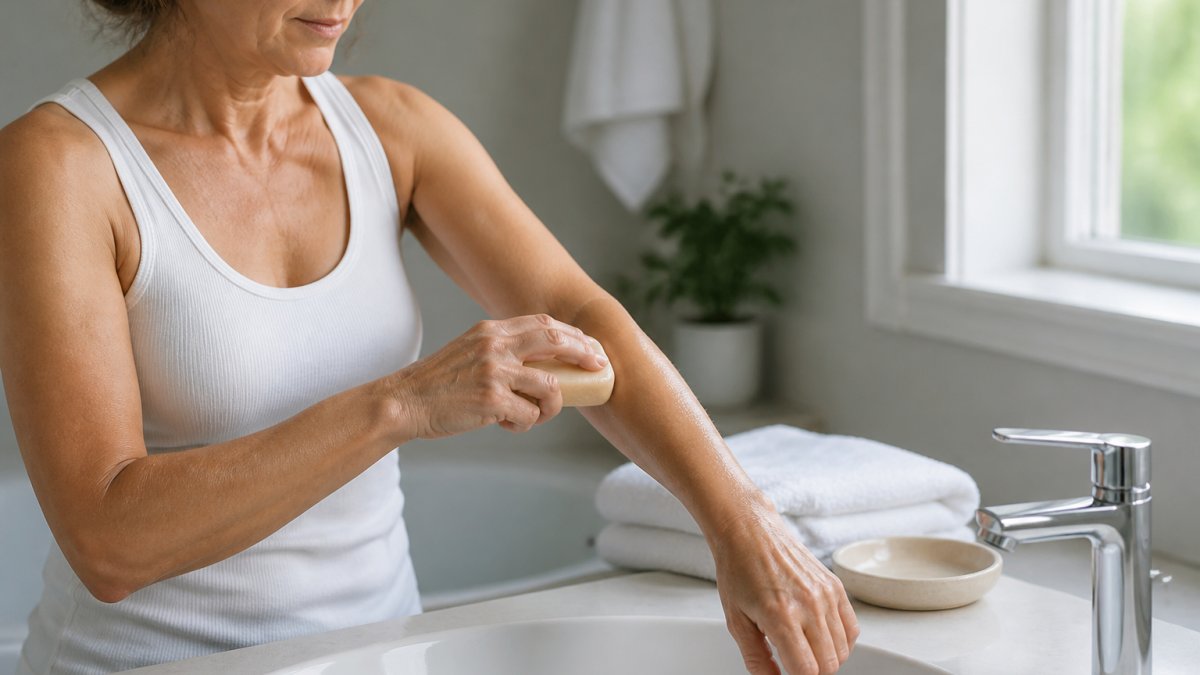
Using a natural bar for deep cleaning is a five-minute routine, not a scrub. Technique matters as much as the product.
- Wet the skin with lukewarm water and then turn the water off.
- Rub the bar directly on the skin or work up a lather in your hands first, then apply.
- Leave it on for about three minutes. This dwell time is what separates a deep clean from a quick wash. It is also the instruction on every Nature's Gift bar.
- Rinse thoroughly with lukewarm water until no residue remains.
- Pat dry with a clean towel rather than rubbing.
- Moisturise within a few minutes while the skin is still slightly damp.
Repeat once daily for body use, and once or twice daily for the face depending on how your skin responds.
Common Mistakes That Wreck a Deep-Cleaning Routine
Most deep-cleaning routines fail for the same handful of reasons, none involving the soap itself.
- Using hot water. Heat strips the barrier faster than any ingredient.
- Skipping the dwell time. Rinsing immediately removes the benefit of the formula.
- Over-cleansing. Twice a day is plenty for most people; more causes rebound oil.
If you have a chronic skin condition, pair any cleansing routine with the guidance of a clinician who knows your history. A soap supports skin function; it does not manage a medical condition.
Getting a deep clean that actually helps your skin comes down to matching the formula to your skin type, reading the label honestly, and using the bar the way it was designed to be used.
Frequently Asked Questions
Which soap is best for dirty skin?
A bar that lifts excess oil and debris without stripping the skin barrier. Look for saponified plant oils such as olive, coconut, and safflower, plus a short ingredient list. For heavy debris, a deep-cleansing formula with carbon or clay can help, but the deciding factor is how your skin feels 10 minutes after rinsing: soft and comfortable, not tight or stinging.
Can charcoal soap help remove dirt and oil from skin?
Charcoal is included in many deep-cleansing bars because it binds to oil and particles on the surface. It works best as part of a short contact routine: lather, leave for two to three minutes, then rinse. It will not pull debris from deep inside pores, so treat it as surface cleaning plus oil control, not a cure for a skin condition.
How often should you use a deep-cleansing soap?
Start with once daily, ideally in the evening, and use a gentler bar or plain water in the morning. If your skin feels tight, flakes, or stings, drop to every other day. Blemish-prone and oily skin often tolerates daily use; dry or sensitive skin usually does better at two to three times a week.
How can you tell if a natural soap is too drying for your skin?
Check three signals within an hour of washing: tightness that lasts more than a few minutes, visible flaking or ashiness, and stinging when you apply moisturiser. Any of these means the bar is stripping your skin barrier. Switch to an unscented or higher-oil formula, shorten contact time to under a minute, and moisturise while skin is still damp.
Compartir esta publicación
- Etiquetas: buy natural soap for deep skin cleaning, charcoal soap for deep cleansing, deep cleansing soap for blemish-prone skin, how to choose soap for your face, natural soap, natural soap for sensitive skin