

7 Causes of Itchy Skin Sores That Won't Heal
Posted by Editorial Team on
Last Updated: November 2, 2026
Quick Summary
Itchy skin sores that won't heal usually come from inflammatory skin disease, contact irritation or allergy, infection, infestation, or a healing problem driven by circulation, diabetes, or repeated scratching. A sore that has not improved after two weeks, is getting bigger, or shows signs of infection needs medical care.
- Eczema and psoriasis are immune-driven, so scrubbing harder makes both worse.
- Remove a contact dermatitis trigger and the rash usually settles within a week or two.
- Scabies itching is usually far worse at night, with burrows between fingers or on wrists.
- Signs of infection include spreading redness, warmth, pus, foul smell, and a red streak.
- Wash gently once daily with lukewarm water and a mild cleanser, then pat dry.
Table of Contents
- Why Itchy Skin Sores That Won't Heal Need a Closer Look
- Common Causes of Itchy Skin Lesions
- Scabies Burrows and Symptoms
- Infected Skin Sores Signs
- When to See a Doctor for a Non-Healing Sore
- What to Do While You Wait for an Appointment
- Choosing a Gentle Cleanser for Irritated Skin
- Frequently Asked Questions
Why Itchy Skin Sores That Won't Heal Need a Closer Look
Itchy skin sores that won't heal are a sign your skin's normal repair process has stalled, and the cause behind that stall decides what will actually help. People who have scratched for weeks, tried several creams, and still have the same raw patch are a common experience with itchy sores that won't heal. A sore that lingers is not just annoying. It is a message.
Most people treat the itch and ignore the sore. That is backwards.
The itch is a symptom. The non-healing is the clue. Something is either keeping the skin inflamed, keeping it infected, or keeping it under constant attack from an irritant. Find that something and the sore starts to close.
Below, we break down the most likely causes, how to spot each one, and exactly when a sore stops being a nuisance and becomes a reason to call a doctor.
Common Causes of Itchy Skin Lesions
A skin lesion is any area of skin that looks different from the skin around it, including sores, bumps, patches, and scaly spots. When a lesion is both itchy and slow to heal, the cause usually falls into one of five groups: inflammatory skin disease, contact irritation or allergy, infection, infestation, or a healing problem driven by circulation, diabetes, or repeated scratching. Sorting your sore into the right group is the fastest way to get relief, because each group needs a different approach.
Here is the short version, with the detail that matters for a sore that will not close:
| Cause group | Typical look | Itch level | Why it may not heal |
|---|---|---|---|
| Eczema | Dry, red, cracked patches; may ooze or crust | High | Scratching reopens cracks and keeps the barrier broken |
| Psoriasis | Thick, scaly, silvery patches; fissures and bleeding | Moderate | Immune-driven scaling persists without treatment |
| Contact dermatitis | Red rash confined to where something touched you | High | Trigger stays in contact with skin (jewelry, detergent, tape) |
| Fungal infection | Ring-shaped, scaly edge; may be itchy and spreading | High | Fungus persists without antifungal treatment |
| Bacterial infection | Warm, oozing, crusted, or spreading sore | Variable | Bacteria delay healing and can spread |
| Scabies | Tiny burrows, worse at night; often between fingers or on wrists | Severe | Mites remain until treated; scratching causes secondary infection |
| Venous or diabetic ulcer | Shallow sore on lower leg or foot; may be itchy as it heals | Low to moderate | Poor circulation, pressure, or high blood sugar slows repair |
Inflammatory Conditions: Eczema and Psoriasis
Eczema and psoriasis are the two most common inflammatory causes of itchy, stubborn sores. Eczema makes skin dry, red, and cracked, and scratching those cracks keeps them open. Psoriasis builds thick, scaly patches that can fissure and bleed. Both are driven by an overactive immune response, not by dirt or poor hygiene, so scrubbing harder makes both worse.
A key difference: eczema often appears in the folds of the elbows and knees, while psoriasis favors elbows, knees, scalp, and lower back. If you recognize either pattern, a gentle routine matters more than a harsh one. You can browse cleansers formulated for eczema and psoriasis to find one that fits your routine.
Irritants, Allergies, and Contact Dermatitis
Contact dermatitis is inflammation caused by direct contact with something your skin reacts to. It comes in two forms: irritant (soap, detergent, chemicals) and allergic (perfume, pollen, certain metals). The tell is location: a rash that appears exactly where a watchband, waistband, or new lotion touched your skin points to contact dermatitis.
Common triggers to check:
- New soap, shampoo, or laundry detergent
- Perfume, cologne, or scented lotion
- Nickel in jewelry or belt buckles
- Household cleaners and disinfectants
- Plants such as poison ivy
- Adhesive tape or bandage material
Remove the trigger and the rash usually settles within a week or two. If it does not, look elsewhere, because a sore that stays open after the trigger is gone may have become infected or may have another cause.
Infections: Bacterial, Viral, and Fungal
Infection is one of the most common reasons a sore stops healing. Bacteria such as Staphylococcus aureus and Streptococcus can move into broken skin, causing warmth, pus, crusting, and spreading redness. Viral infections like herpes simplex produce clusters of itchy or painful blisters that can leave slow-healing erosions. Fungal infections, including ringworm and yeast, cause scaly, itchy patches that persist without antifungal treatment.
The practical point: an infected sore needs medical care, not another home remedy. Signs of infection are covered in the next section.
Infestations: Scabies and Other Mites
Scabies is a mite infestation that causes intense itching, usually far worse at night (the WHO). The mites burrow into the top layer of skin, leaving tiny raised tracks called burrows, often between the fingers, on the wrists, or around the waist. Scratching scabies sores breaks the skin, and broken skin invites bacterial infection, which is why some scabies cases turn into crusted, slow-healing sores. If you suspect scabies, our guide on how to identify and treat a burrow in scabies walks through what the burrows look like and what treatment involves.
Healing Problems: Circulation, Diabetes, and Repeated Trauma
Not every nonhealing sore is an infection or a rash. A sore that stays open can reflect a healing problem. Venous ulcers, common on the lower leg, occur when poor vein function raises pressure in the skin and slows repair. Diabetic foot ulcers occur when high blood sugar damages nerves and circulation, so minor injuries go unnoticed and heal poorly. Repeated scratching or friction from clothing can also keep a sore from closing by reopening it every day.
A realistic definition of nonhealing: a sore that has not improved after two weeks, or one that is getting bigger, deeper, or more painful. Persistence varies by wound and cause, but circulation, diabetes, infection, and repeated trauma are the factors most likely to delay healing.
Scabies Burrows and Symptoms
Scabies is a mite infestation that causes intense itching, and the itch is usually far worse at night. The mites burrow into the top layer of skin, leaving tiny raised tracks called burrows, often between the fingers, on the wrists, or around the waist.
Nature's Gift Skin Lotion ( 8 oz & 1.5 oz ) →
If you suspect scabies, our guide on how to identify and treat a burrow in scabies walks through what the burrows look like and what treatment involves.
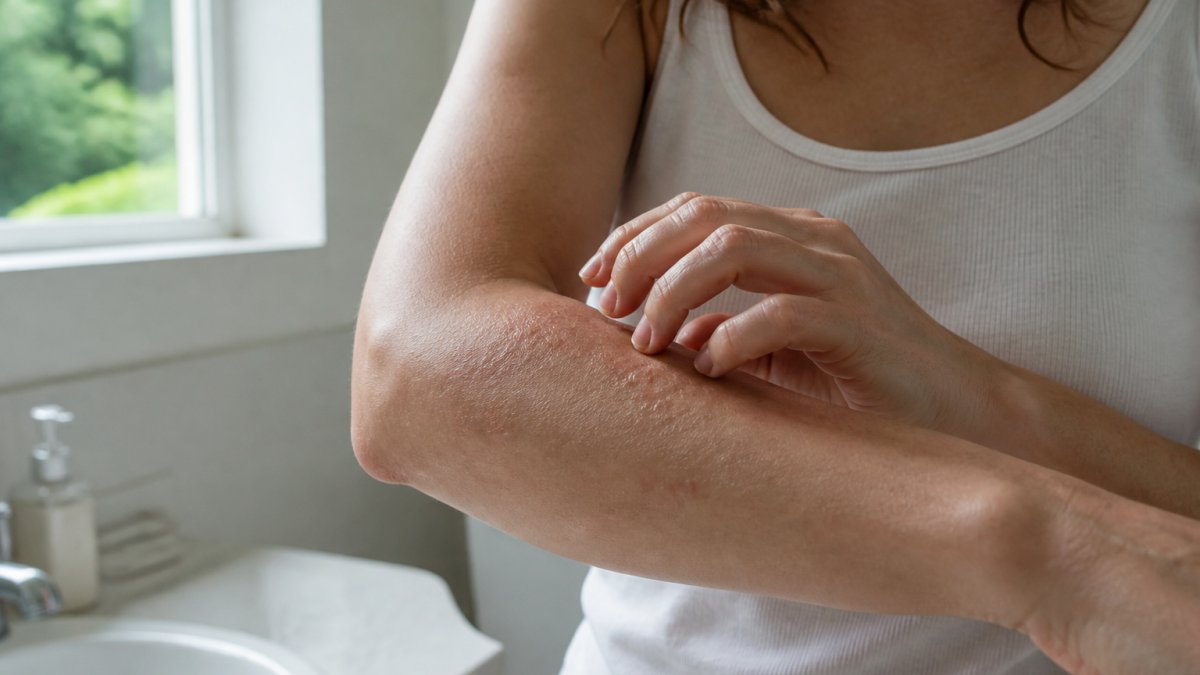
Scratching scabies sores breaks the skin, and broken skin invites bacterial infection. That combination is why some scabies cases turn into crusted, slow-healing sores.
Infected Skin Sores Signs
An infected sore is one where bacteria have moved in and are slowing healing. The signs are usually obvious once you know them:
- Increasing redness spreading outward
- Warmth around the sore
- Pus or cloudy fluid
- Foul smell
- Swelling that gets worse, not better
- A red streak running from the sore
These signs mean the sore needs medical care, not another home remedy. For cleansing while you arrange care, see the Deep Wound Lesion Cleanse Kit.

When to See a Doctor for a Non-Healing Sore
See a doctor for a non-healing sore if it has not improved after two weeks, is getting bigger, or shows any sign of infection. That is the simple rule. Do not wait for it to become an emergency.
Go sooner, same day, if you notice:
- A sore that bleeds on its own
- A sore with a dark or irregular border that is changing in size
- Fever, chills, or feeling unwell
- Severe pain out of proportion to the wound
- A sore on a person with diabetes or a weakened immune system
A dermatologist can identify most causes on sight and take a small sample if needed. Persistent symptoms deserve a proper medical evaluation, not guesswork.
What to Do While You Wait for an Appointment
While you wait, your goal is to protect the skin barrier and stop the itch-scratch cycle. Every scratch reopens the sore and resets the healing clock.
Start with these steps:
- Wash gently once daily with lukewarm water and a mild cleanser.
- Pat dry, never rub.
- Apply a plain moisturizer while skin is still damp.
- Keep nails short and consider cotton gloves at night.
- Avoid hot showers, harsh soaps, and scented products.
- Note what you used and ate each day, so you can spot triggers.
For more relief ideas, our article on ways to soothe itchy skin from parasites covers practical home options in more depth.
Choosing a Gentle Cleanser for Irritated Skin
A gentle cleanser is one that lifts debris without stripping the skin's natural oils, and it is the single easiest change you can make. Harsh soaps remove the barrier that keeps moisture in and irritants out.
Look for these qualities:
- Fragrance-free or low-scent
- Non-comedogenic, so it won't clog pores
- Plant-based surfactants rather than harsh detergents
- No drying alcohols
If you want more guidance first, read our tips on how to soothe irritated skin at home naturally before you switch products.
Itchy skin sores that won't heal are frustrating, and guessing at the cause only stretches the frustration out. Start with a gentle routine, track what changes, and see a doctor for anything that lingers. Browse the Nature's Gift Skin Lotion, Nature's Gift Deep Wound/Lesion Cleanse Kit, and Nature's Gift Skin Balm from Get Your Life Back LLC to see what fits your routine.
Frequently Asked Questions
What can cause sores that won't heal?
Sores that resist healing often trace back to ongoing infection, poor circulation, inflammatory conditions like eczema, or repeated scratching that reopens the skin. A sore that stays open for more than two weeks, or one that keeps returning in the same spot, deserves a medical evaluation rather than more home treatment. A dermatologist can identify whether the cause is infectious, inflammatory, or related to an underlying systemic condition.
Can scabies cause itchy skin sores that won't heal?
Yes. Scabies mites burrow into the skin and trigger intense itching, and the scratching that follows can break the skin and create sores that struggle to heal. The burrows themselves are tiny, thread-like lines often found between the fingers, on the wrists, or in skin folds. Because the itch persists until the mites are treated, sores may keep reappearing. A doctor can confirm scabies and prescribe treatment for the whole household.
How can I tell whether an itchy sore is infected?
Watch for spreading redness, warmth around the sore, swelling, pus, or a foul smell. Increasing pain and fever are also warning signs. These infected skin sores signs mean the sore needs medical attention promptly, especially if you have diabetes or a weakened immune system. Do not squeeze or pick at the sore, and keep it covered with a clean bandage until you can be seen.
When should I see a doctor about a skin sore that won't heal?
Book an appointment if a sore has not improved after two weeks, keeps growing, bleeds easily, or changes in size, shape, or color. Seek same-day care for spreading redness, fever, or pus. A non-healing sore can have many causes, from infection to skin cancer, so a proper diagnosis matters. A dermatologist can examine the lesion and recommend the right treatment.

Share this post
- Tags: causes of itchy skin lesions, infected skin sores signs, itchy skin sores, scabies burrows and symptoms, what could be causing itchy skin sores that won't heal?, when to see a doctor for a non-healing sore