

How to Deep Clean Skin and Remove Debris Naturally
Publicado por Editorial Team en
Last Updated: October 25, 2026
Quick Summary
To deep clean skin safely, follow three stages in order: soften with warm water for 30 seconds, massage cleanser gently for about a minute, then rinse, pat dry and moisturize within a minute while skin is still damp. This lifts dirt, oil and dead cells without stripping your skin barrier.
- Warm water for 30 seconds softens dead skin cells before you cleanse.
- Massage cleanser in small circles for about a minute, never scrub hard.
- Apply moisturizer within a minute of patting dry to protect the skin barrier.
- Most people do well using debriding soap two to three times a week.
- Stop exfoliation for 5 to 7 days if skin shows signs of over-cleansing.
Table of Contents
- Why Deep Cleaning Skin Debris Matters for Holistic Wellness
- How to Deep Clean Skin: A Safe Step-by-Step Routine
- Choosing the Best Debriding Soap for Your Skin Type
- How Often to Use Debriding Soap Without Over-Cleansing
- Skin Barrier Care After Cleansing: What to Do Next
- Deep Cleansing vs. Exfoliating: What the Detox Claims Get Wrong
- Start Your Deep-Cleanse Routine with Nature's Gift
- Frequently Asked Questions
Why Deep Cleaning Skin Debris Matters for Holistic Wellness
Deep cleaning skin is the practice of lifting dirt, excess oil, sweat, dead skin cells, and product buildup from the surface and inside congested pores.
Your skin is your largest organ (Introduction: Skin). It sheds cells constantly, and it pushes out sebum and sweat all day.
The word "holistic" gets thrown around loosely. Here it means treating skin as part of the whole body.
Below, we'll show you exactly how to deep clean skin safely at home, step by step.
How to Deep Clean Skin: A Safe Step-by-Step Routine
The safest deep cleanse follows three stages: soften, cleanse, then rehydrate. Skip a stage and you risk irritation, stripped skin, or a damaged skin barrier. Here is the routine we recommend, in order.
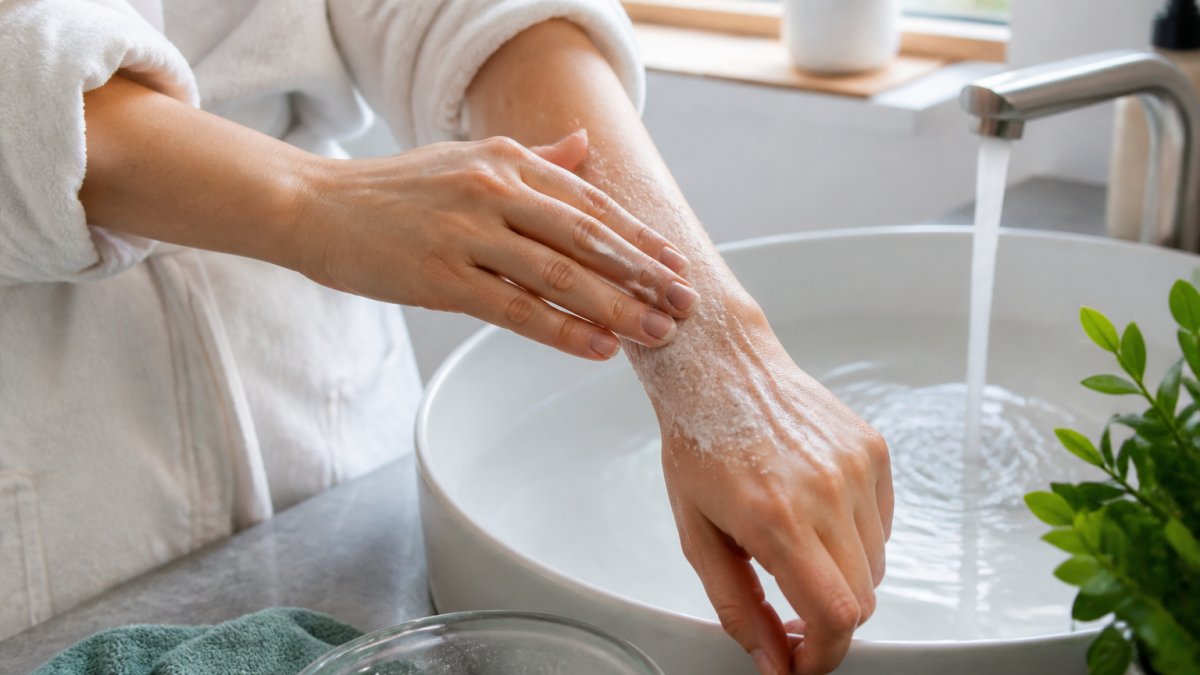
Step 1: Prepare and Soften the Skin
Start with warm water, not hot. Warm water softens dead skin cells and loosens surface debris so the cleanse works better. Hot water strips oil and leaves skin tight and irritated.
- Wet the area with warm water for 30 seconds.
- Use a soft washcloth, never a rough scrub pad.
- Skip harsh soaps that leave skin squeaky and dry.
Step 2: Cleanse, Exfoliate, and Lift Debris
This is the core step. Apply your cleanser or exfoliant and massage gently in small circles. The goal is to lift buildup, not to scrub hard.
Massage for about a minute. Then rinse and repeat once if the skin still feels coated. A common mistake is pressing too hard, which causes inflammation and small tears. Gentle pressure plus the right formula does more than force.
If you want more safe techniques for lifting debris, read our guide on effective ways to remove skin debris safely.
Step 3: Rinse, Pat Dry, and Rehydrate
Rinse with lukewarm water until the product is gone. Pat dry with a clean towel; do not rub. Then apply a moisturizer within a minute, while skin is still slightly damp, to lock in water.
This last step protects the skin barrier. Dry, unprotected skin cracks and lets irritants in, which undoes the work you just did.
The safest deep cleanse follows three stages in this order.
| Step | What to do | Time or frequency |
|---|---|---|
| Prepare and soften | Wet area with warm water, use soft washcloth | 30 seconds |
| Cleanse and lift debris | Massage cleanser gently in small circles, rinse and repeat once if coated | About a minute |
| Rinse, pat dry, rehydrate | Rinse lukewarm, pat dry, apply moisturizer while damp | Within a minute |
Choosing the Best Debriding Soap for Your Skin Type
The best debriding soap for you depends on your skin type, how reactive it is, and what you plan to do after cleansing. Debriding soap is a cleanser formulated to loosen and lift debris from the skin surface and pores. It is not the same as a scented body wash, and it is not a scrub. Match the formula to your skin, then match your tools and technique to the formula.
Match the formula to your skin type
- Sensitive or reactive skin: Choose hypoallergenic, non-comedogenic formulas with a short ingredient list. Avoid fragrance, essential oils, and strong surfactants that leave skin tight. Patch test on the inner forearm for 24 hours before using on the face.
- Oily or congested skin: Choose a cleanser that removes excess oil without over-drying. A gel or foaming formula is often better tolerated than a rich cream. Do not chase a squeaky-clean finish; that usually means the barrier has been stripped.
- Dry skin: Avoid anything that leaves a tight feeling. Look for hydrating ingredients such as glycerin or ceramides, and keep water temperature lukewarm. Dry skin often does better with a cream or lotion cleanser than a foaming one.
- Acne-prone skin: Non-comedogenic matters most here. Gentle chemical exfoliants such as salicylic acid can help keep pores clear, but avoid combining them with physical scrubs on the same day. If you use prescription acne treatments, ask your clinician before adding an exfoliating cleanser.
- Mature skin: Skin thins with age and recovers more slowly from irritation. Favor gentle formulas and lower exfoliation frequency, and prioritize barrier-supporting moisturizers after cleansing.
- Compromised or slow-healing skin: This includes active eczema, psoriasis flares, open lesions, sunburn, or skin recently treated with retinoids or acids. Go slow, patch test first, and skip exfoliation entirely until the skin is calm. When in doubt, ask a dermatologist.
Choose your exfoliant type deliberately
There are two broad categories, and they behave differently:
- Physical exfoliants use particles or tools to lift dead cells. They work quickly but are easy to overdo. Avoid rough scrubs, walnut shells, and stiff brushes, which can cause micro-tears and irritation.
- Chemical exfoliants use acids or enzymes to loosen the bonds between dead cells. They are more even than scrubs but require attention to concentration and frequency. Common options include salicylic acid (oil-soluble, helpful for congested pores) and gentle fruit enzymes. Start low and go slow.
Tools and methods to avoid
- Rough scrub pads, loofahs, and stiff bristle brushes
- Pore strips used repeatedly, which can irritate the skin around the nose
- DIY extraction with fingernails or unsterilized tools
- Any tool that leaves skin red, stinging, or raw
A soft washcloth and clean hands are enough for most at-home deep cleansing. If you want more safe techniques for lifting debris, read our guide on effective ways to remove skin debris safely.
For a deeper comparison of options, our guide to the best debriding soap walks through how formulas differ.
Our own Nature's Gift line uses a plant-based liquid bio-form carbon with a particle size of 6 angstroms (0.6 nanometers). It is non-comedogenic and hypoallergenic, which matters for reactive skin.
Nature’s Gift – Bioform Carbon Exfoliant Cleanse 1.5 oz $99.95 now →
How Often to Use Debriding Soap Without Over-Cleansing
Most people do well with debriding soap two to three times a week, tapering to once daily if skin tolerates it. Daily use suits oily or congested skin. Dry or sensitive skin often needs less, sometimes once or twice a week. The right frequency is the one your skin can sustain without tightness, redness, or flaking.
A realistic starting schedule
- Oily or congested skin: Start with three times a week for two weeks. If skin feels comfortable, move to once daily. If it feels tight or looks shiny and thin, drop back.
- Combination skin: Use the debriding soap on oily zones two to three times a week and a gentler cleanser elsewhere.
- Dry or sensitive skin: Start once a week. Add a second weekly use only after two calm weeks.
- Acne-prone skin: Two to three times a week is a common starting point. Avoid stacking with prescription actives on the same day unless your clinician approves.
- Mature or compromised skin: Once a week or less, and pause entirely during flares or after procedures.
Measurable signs of over-cleansing
Watch for changes that persist for more than a few days, not just a fleeting tingle:
- Tight, stinging skin right after washing and for hours afterward
- Redness or flaking that was not there before
- More breakouts, not fewer, especially in clusters
- A shiny, thin look to the skin
- Increased sensitivity to products that used to feel fine
- Dry patches that do not respond to moisturizer
If you see these, cut back to once a week or pause for a week. The skin barrier needs time to recover.
How to recover if you have over-cleansed
- Stop exfoliation and debriding soap for 5 to 7 days.
- Use a gentle, non-foaming cleanser and lukewarm water.
- Apply a barrier-supporting moisturizer to damp skin twice daily.
- Avoid actives such as retinoids, acids, and vitamin C until skin is calm.
- Reintroduce one product at a time, starting with the gentlest.
If you are deciding on a soap for regular use, our guide on how to buy natural soap for deep skin cleaning covers what to look for.
Skin Barrier Care After Cleansing: What to Do Next
Skin barrier care after cleansing means restoring water and oils you removed during the wash. Do it within a minute of patting dry, while skin is damp. This is the step most people skip, and it is the one that protects results.
A simple after-cleanse routine:
- Apply a moisturizer to damp skin.
- Use a formula with soothing ingredients if skin is reactive.
- Avoid alcohol-based toners that sting.
- Give skin a rest day from exfoliation each week.
Our Nature's Gift Bioform Carbon Exfoliant Cleanse pairs Bioform Carbon with coral calcium and ellagic acid from Meeker red raspberry. It is designed to loosen stubborn surface debris and support smoother-looking skin. Use it after a prep spray to help absorption.
Deep Cleansing vs. Exfoliating: What the Detox Claims Get Wrong
Deep cleansing and exfoliating are not the same thing, and "skin detox" claims often blur them. Deep cleansing lifts debris from pores. Exfoliating removes dead cells from the surface.
Here is where the detox marketing goes wrong. Your skin does not "detox" in the way a liver does. It has no built-in flush cycle that a soap can trigger.
Claims about "drawing out impurities" and "lymphatic drainage" through skin care are mostly overstated.
For a science-first look at what detox really means for skin, read our natural skin detox guide.
Start Your Deep-Cleanse Routine with Nature's Gift
The challenge with deep cleaning is consistency, not complexity. A short routine done well beats an aggressive one you abandon after a week. That is why we built the Nature's Gift system around simple steps that work together.
Nature's Gift - Bioform Carbon Exfoliant Cleanse is our pick to start with. It uses Bioform Carbon, coral calcium with 72 trace minerals, and ellagic acid. It is listed at $99.95, now $49.95 for a limited time.

Get started with Get Your Life Back LLC and give your skin a cleaner, smoother base for natural renewal.
Frequently Asked Questions
How do I deep clean my skin without irritating it?
Start with lukewarm water and a gentle, non-comedogenic cleanser, then work in small circular motions for 30 to 60 seconds before rinsing. If you use an exfoliant, keep the pressure light and stop if you feel stinging. Follow immediately with a moisturizer to support the skin barrier. People with eczema, psoriasis, or very sensitive skin should patch test a new product on a small area first and use it two to three times a week rather than daily.
What is the difference between deep cleansing and exfoliating?
Deep cleansing lifts dirt, excess oil, sweat, and product buildup from the surface and pores, while exfoliation removes dead skin cells so the surface looks smoother. A debriding soap like Nature's Gift® Debriding Soap can do both in one step. Exfoliating creams with a slight grit, such as the Beauty Forever Xfoliant Cream, add a physical scrub. Most routines benefit from cleansing daily and exfoliating two to three times a week.
How often should you use a debriding soap?
Most people can use a debriding soap once or twice daily on the body. If you have sensitive or compromised skin, begin with two to three times a week and build up as your skin tolerates it. Signs of over-cleansing include tightness, redness, flaking, and stinging when you apply moisturizer. If those appear, cut back to every other day and focus on skin barrier care after cleansing with a hydrating cream.
Can deep cleansing remove buildup from pores and help with blackheads?
Deep cleansing reduces the oil, dead skin cells, and debris that clog pores and contribute to blackheads. Consistent use of a non-comedogenic cleanser plus gentle exfoliation keeps pores clearer over time. Avoid aggressive squeezing or extraction tools at home, since they can cause inflammation and scarring. For stubborn congestion or painful breakouts, see a dermatologist before adding stronger actives to your routine.

Compartir esta publicación
- Etiquetas: best debriding soap, deep clean skin, deep cleans and removes skin debris for holistic wellness, how often to use debriding soap, how to deep clean skin, skin barrier care after cleansing